- This topic is empty.
-
AuthorPosts
-
23/03/2026 at 11:51 #4807
In surveying, accuracy is not just a technical requirement—it is the foundation on which every reliable measurement is built. Whether working on construction sites, infrastructure projects, or geodetic surveys, professionals know that even small deviations can lead to costly errors. Among the many tools that support precision, centering rods and brackets often receive less attention than high-end instruments, yet they play a critical role in ensuring structural stability and measurement reliability.
This article takes a practical look at how centering rods and brackets improve structural stability, why they matter in real-world surveying applications, and how long-term manufacturing expertise—such as that of Hangzhou Runhe Surveying Instrument Co., Ltd.—translates into dependable field performance.
Understanding Structural Stability in Surveying
Structural stability in surveying refers to the ability of an instrument setup to remain fixed, centered, and unaffected by external forces such as wind, vibration, or uneven ground. A stable structure ensures that the reference point used for measurement stays consistent throughout the surveying process.
Instability can arise from:
-
Uneven terrain or soft ground
-
Improperly mounted instruments
-
Weak or poorly designed supporting accessories
-
Repeated setup and adjustment errors
Centering rods and brackets are designed to address these challenges by providing a rigid, well-aligned connection between the instrument and the ground reference point.
What Are Centering Rods and Brackets?
Centering Rods
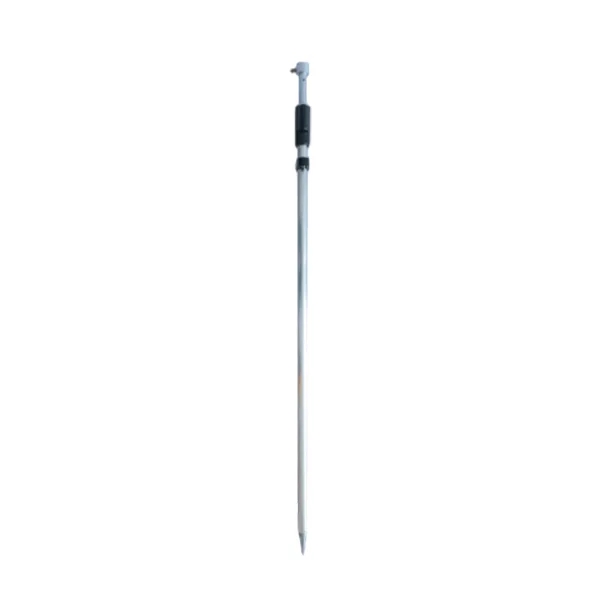
Centering rods are vertical support components used to precisely position surveying instruments—such as GNSS receivers or total stations—directly over a reference point. Their primary function is to ensure accurate vertical alignment while maintaining rigidity during operation.
Modern centering rods are often made from lightweight yet strong materials, such as aluminum alloys or carbon fiber, to balance portability with stability. For RTK applications, carbon fiber rods are especially valued for their strength-to-weight ratio and resistance to deformation.
Brackets
Brackets are structural connectors that secure centering rods to tripods, instruments, or other mounting systems. A well-designed bracket ensures that the rod remains firmly in place without rotation or slippage. Precision machining and tight tolerances are essential to prevent micro-movements that can compromise accuracy.
Together, centering rods and brackets form a unified system that supports both the instrument and the integrity of the measurement.
How Centering Rods Improve Structural Stability
1. Precise Vertical Alignment
A core requirement in surveying is placing the instrument exactly over a known point. Centering rods are engineered to maintain straightness and verticality, which reduces centering errors. High-quality rods feature consistent wall thickness and material uniformity, ensuring they do not bend or twist under load.
2. Resistance to Environmental Forces
In outdoor surveying, wind and minor ground vibrations are unavoidable. A rigid centering rod minimizes oscillation, allowing the instrument to remain steady even in less-than-ideal conditions. This stability is especially important for long observation periods, such as static GNSS measurements.
3. Consistency Across Setups
Repeated setups are common in large projects. A reliable centering rod provides consistent geometry every time, reducing the need for repeated recalibration and minimizing cumulative errors across multiple measurement points.
How Brackets Enhance Overall Stability
Secure Load Distribution
Brackets act as the interface between the rod and the supporting structure. A well-designed bracket distributes load evenly, preventing stress concentration that could lead to deformation or loosening over time.
Anti-Rotation Design
Rotation is a subtle but serious source of error. Precision brackets often include anti-rotation features or locking mechanisms that keep the centering rod fixed in orientation. This is particularly important when using pole-mounted GNSS equipment, where even slight rotation can affect antenna alignment.
Durability Under Field Conditions
Surveying accessories are frequently exposed to dust, moisture, and temperature variations. Robust brackets made from corrosion-resistant materials maintain performance over long service lives, contributing to stable setups year after year.
The Role of Manufacturing Experience
The effectiveness of centering rods and brackets depends heavily on manufacturing quality. Hangzhou Runhe Surveying Instrument Co., Ltd. traces its roots back to 1980, when it operated as Hangzhou Tianmu Surveying Equipment Factory. Over decades of specialization in surveying instruments and accessories, the company has developed a deep understanding of field requirements.
Runhe’s product range covers:
-
Tripods
-
Leveling staffs
-
Centering rods and brackets
-
RTK-specific carbon fiber rods
This long-term focus allows the company to refine details that directly impact structural stability, such as material selection, machining accuracy, and assembly consistency. Strict quality control processes ensure that each component performs reliably in demanding surveying environments.
Practical Benefits in Real Projects
Improved Measurement Accuracy
Stable centering reduces horizontal and vertical errors, leading to more accurate data collection. This directly affects downstream tasks such as mapping, layout, and deformation monitoring.
Increased Efficiency on Site
When equipment is stable and easy to set up, surveyors spend less time making adjustments and more time collecting data. Over the course of a project, this efficiency can significantly reduce labor time.
Reduced Equipment Wear
A stable setup minimizes unnecessary stress on instruments. By preventing unwanted movement, centering rods and brackets help extend the service life of expensive surveying equipment.
Integration with Modern Surveying Systems
Today’s surveying projects often combine traditional methods with advanced GNSS and RTK technologies. Centering rods and brackets must be compatible with these systems while maintaining structural integrity.
For example, RTK carbon fiber rods are designed to work seamlessly with high-precision GNSS receivers. Their rigidity ensures that the antenna phase center remains stable, while precision brackets maintain alignment during real-time measurements.
For readers interested in detailed product specifications and application examples, the following reference provides additional technical context:<a href="https://www.runhesurveying.com/Centering-rod-and-bracket">Centering Rod and Bracket</a>
Quality Philosophy and Long-Term Trust
A key reason centering rods and brackets contribute so effectively to structural stability lies in the philosophy behind their production. Hangzhou Runhe Surveying Instrument Co., Ltd. follows a development principle centered on exploration, quality, and meeting evolving user needs.
This approach has helped the company build long-term partnerships with clients who rely on consistent performance rather than short-term solutions. In surveying, where precision and trust go hand in hand, such reliability is essential.
Conclusion
Centering rods and brackets may appear simple, but their impact on structural stability and measurement accuracy is profound. By ensuring precise alignment, resisting environmental forces, and maintaining consistency across setups, they form the backbone of reliable surveying operations.
Backed by decades of manufacturing experience and a strong commitment to quality, products from established suppliers like Hangzhou Runhe Surveying Instrument Co., Ltd. demonstrate how thoughtful design and rigorous production standards translate into real-world performance. For surveyors seeking dependable results, investing in well-made centering rods and brackets is not an accessory choice—it is a strategic decision.
http://www.runhesurveying.com
Hangzhou Runhe Surveying Instrument Co., Ltd. -
-
AuthorPosts

- You must be logged in to reply to this topic.