- This topic is empty.
-
AuthorPosts
-
01/06/2026 at 12:04 #5170
In the competitive landscape of industrial insulation and mechanical components, engineers and procurement managers face a persistent challenge: finding materials that deliver reliable performance without breaking the budget. While premium epoxy-glass composites offer exceptional strength, and economy phenolic papers provide basic insulation, a critical gap exists for applications requiring impact resistance, oil tolerance, and machinability at a sustainable price point. This is where phenolic cotton cloth laminates have emerged as the intelligent middle ground—a material that bridges cost efficiency with mechanical toughness.
The Engineering DNA of Phenolic Cotton Laminates
Phenolic cotton cloth laminates are thermoset composites constructed from woven cotton fabric thoroughly saturated with heat-reactive phenolic resin, then molded and cured under high pressure. This manufacturing process creates a dense, rigid structure that inherits the natural toughness of textile fibers while gaining the thermal stability and electrical insulation properties of phenolic chemistry.
Unlike paper-based phenolic laminates that rely on cellulose fibers for reinforcement, cotton cloth variants leverage the superior tensile strength and tear resistance of woven textile architecture. This fundamental difference translates into measurable performance advantages: enhanced impact absorption, reduced brittleness, and superior dimensional stability under mechanical stress.
The material operates reliably at continuous service temperatures up to 120°C, maintaining both its mechanical integrity and dielectric properties within this thermal envelope. This positions it squarely in the Grade E insulation class, making it suitable for a broad spectrum of low-to-medium voltage electrical applications and mechanical systems where thermal loads remain moderate.
Where Phenolic Cotton Laminates Solve Real Problems
Industrial manufacturers encounter three recurring pain points that phenolic cotton laminates address with precision:
Noise and Lubrication Costs in Metal Gearing: Traditional metal gears generate significant operational noise and demand constant lubrication to prevent premature wear. Phenolic cotton laminates offer a self-lubricating alternative with a naturally low coefficient of friction. When machined into gears, bushings, or bearing pads, these components reduce noise pollution in manufacturing environments while eliminating the maintenance overhead associated with lubrication schedules.
Impact Failure in Standard Plastics: Many engineering plastics exhibit brittleness under shock loading, particularly in cold environments or high-speed applications. The woven cotton reinforcement in phenolic laminates provides exceptional impact resistance and shock absorption, outperforming brittle paper-based laminates and many commodity thermoplastics. This makes the material ideal for jigs, fixtures, and protective housings in high-vibration settings.
Machining Economics for Complex Insulators: When electrical equipment manufacturers need custom-shaped insulation components, they face a choice: machine expensive metals with high tool wear, or risk dimensional instability with softer plastics. Phenolic cotton laminates deliver excellent machinability, producing clean cuts and fine surface finishes with standard tooling. The material machines faster than steel and more precisely than many plastics, reducing fabrication costs while maintaining tight tolerances.
Performance Characteristics That Drive Selection
The technical profile of phenolic cotton cloth laminates reveals why designers specify this material for demanding applications:
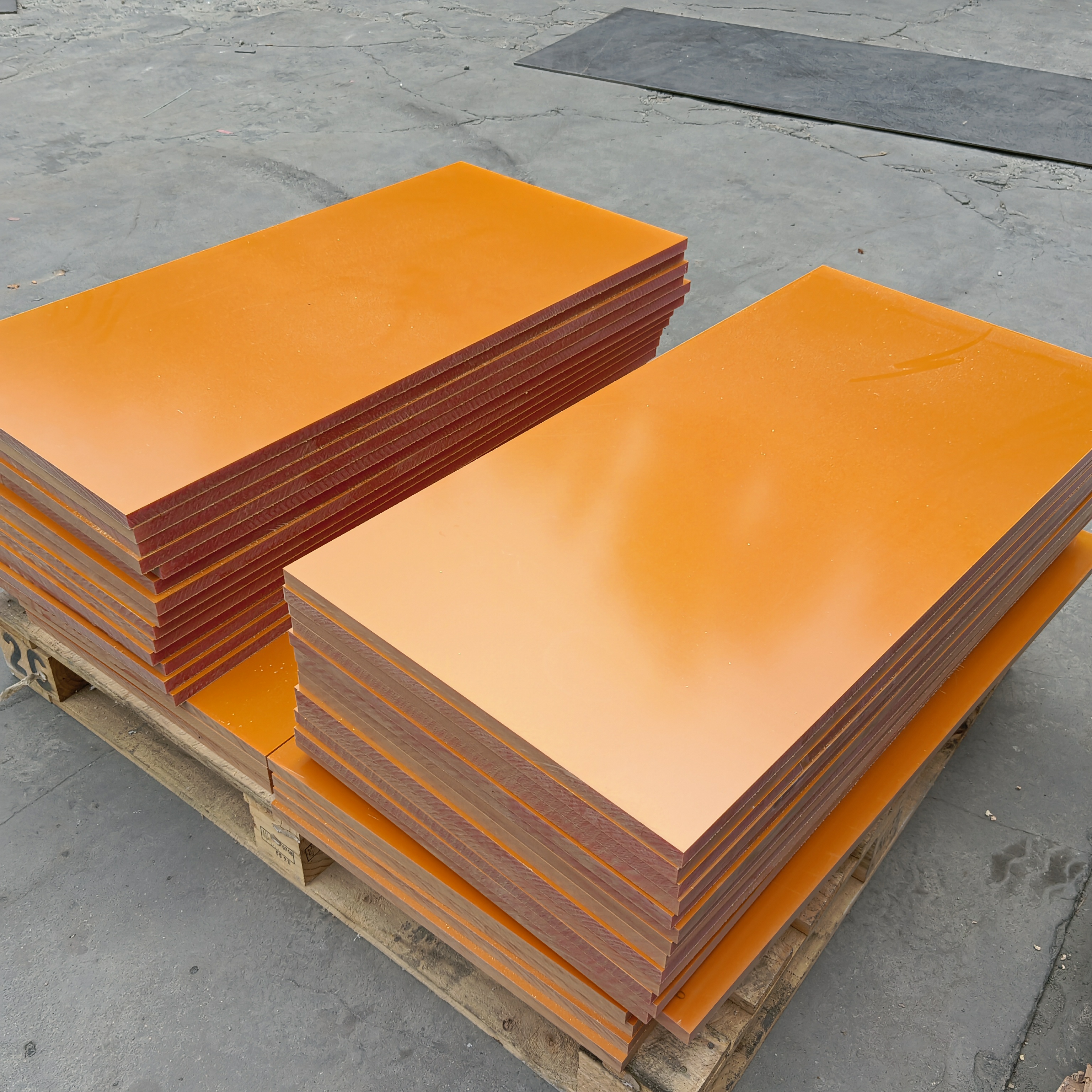
Oil and Chemical Resistance: The phenolic resin matrix exhibits natural resistance to lubricating oils, greases, and many industrial solvents. This chemical tolerance ensures that components maintain their dimensions and mechanical properties even when continuously exposed to fluid environments—a critical requirement for automotive and machine tool applications.
Electrical Insulation Capability: While not rated for high-voltage applications, phenolic cotton laminates provide good electrical insulation suitable for low-voltage switchgear, terminal blocks, and structural supports within electrical cabinets. The material prevents accidental shorts and provides a non-conductive barrier between live components and grounded enclosures.
Anti-Galling Properties: In assembly fixtures and tooling applications, phenolic cotton laminates prevent metal-on-metal contact that can cause galling, scoring, or surface transfer. This protective characteristic extends the life of expensive tooling and ensures consistent surface quality in manufactured parts.
Dimensional Stability: Unlike hygroscopic materials that swell or warp with moisture absorption, properly cured phenolic laminates maintain their shape across varying humidity conditions. This stability is essential for precision jigs and fixtures where dimensional drift would compromise manufacturing tolerances.
Shenzhen Xiongyihua Plastic Insulation Ltd.: Engineering-Grade Solutions
As a professional integrated manufacturer specializing in high-performance engineering plastics and insulation materials since 2006, Shenzhen Xiongyihua Plastic Insulation Ltd. has established expertise in delivering phenolic cotton cloth laminates that meet rigorous industrial standards. Operating from Shenzhen, China, with a global footprint spanning Asia, Europe, Australia, and the Americas, Xiongyihua serves manufacturers who demand materials that perform consistently across production environments.
The company’s technical approach centers on 100% virgin raw materials, ensuring that each laminate batch delivers predictable mechanical strength and electrical properties without the performance variability introduced by recycled content. With ISO9001 quality management certification, SGS material certification, and RoHS environmental compliance, Xiongyihua’s phenolic cotton laminates meet the documentation and traceability requirements of regulated industries.
Xiongyihua’s integrated manufacturing model combines material supply with precision CNC processing capabilities. This "material + processing" approach enables customers to receive finished components machined to exact specifications from their technical drawings, eliminating the need to coordinate separate suppliers for raw material procurement and fabrication. Services include CNC milling, laser engraving, precision drilling and tapping—all executed on phenolic cotton laminates with the dimensional accuracy required for mechanical assemblies.
With a production capacity of approximately 1000 tons per month across all product lines and supply ability of 100 tons per month per product category, the company supports both prototype development and high-volume production runs. This scalability proves essential for OEM manufacturers transitioning from design validation to full-scale production without changing suppliers.
Application Intelligence: Matching Material to Mission
Phenolic cotton cloth laminates excel in specific application domains where their unique property combination delivers measurable value:
Automotive and Machine Tool Components: Gears, bushings, wear plates, and sliding pads benefit from the material’s combination of toughness, oil resistance, and self-lubrication. The reduced weight compared to metal equivalents contributes to energy efficiency in motion systems.
Electrical Equipment Housings and Supports: Terminal boards, busbar supports, and mounting plates in low-voltage distribution equipment leverage the material’s electrical insulation and mechanical rigidity. The anti-galling properties protect threaded inserts and mounting hardware.
Manufacturing Jigs and Fixtures: Assembly fixtures, test beds, and tooling components gain durability from the impact resistance while maintaining the non-conductive properties necessary to avoid interference with electrical testing or welding operations.
Industrial Rollers and Conveyor Components: Applications requiring moderate wear resistance and chemical tolerance—such as guide rollers in coating lines or conveyor idlers in chemical processing—utilize phenolic cotton laminates to extend maintenance intervals.
The Cost-Performance Calculus
The economic argument for phenolic cotton cloth laminates rests on total cost of ownership rather than raw material price alone. While the per-kilogram cost exceeds commodity plastics, the material’s superior machinability reduces fabrication time and tool wear. Compared to epoxy-glass composites like FR4 or G10, phenolic cotton laminates deliver adequate performance for non-extreme applications at a fraction of the material cost, maximizing margin on high-volume OEM parts.
The self-lubricating properties eliminate ongoing lubrication expenses and reduce unplanned maintenance downtime. The oil resistance extends component life in fluid-exposed environments, delaying replacement cycles. These operational savings compound over equipment lifecycles, often justifying a higher initial material investment.
Navigating Material Selection: When Phenolic Cotton Is Right
Phenolic cotton cloth laminates represent an optimal choice when project requirements include:
- Moderate mechanical loads with occasional impact or shock exposure
- Operating temperatures consistently below 120°C
- Exposure to lubricating oils, greases, or mild industrial chemicals
- Low-voltage electrical insulation requirements
- Need for complex machined shapes with tight tolerances
- Cost sensitivity that precludes premium epoxy-glass materials
Conversely, applications involving continuous high-voltage exposure, sustained temperatures exceeding 130°C, or structural loads approaching those of metal equivalents may benefit from alternative materials such as epoxy-glass laminates or engineering thermoplastics.
Manufacturing Quality: The Foundation of Reliability
Material performance in real-world applications depends critically on manufacturing consistency. Reputable suppliers implement batch testing protocols that verify key properties including flexural strength, dielectric strength, and dimensional tolerance. Certifications such as ISO9001 provide assurance that quality management systems maintain traceability from raw material receipt through final inspection.
Environmental compliance certifications like RoHS demonstrate that materials meet restrictions on hazardous substances, ensuring compatibility with global supply chains serving regulated markets. SGS material certification provides independent verification of compositional claims and performance characteristics.
For manufacturers sourcing phenolic cotton cloth laminates for mission-critical applications, supplier selection should prioritize demonstrated technical capability, certification depth, and fabrication service integration to minimize supply chain complexity.
Conclusion: Strategic Material Intelligence
In an industrial landscape increasingly focused on cost optimization without performance compromise, phenolic cotton cloth laminates occupy a strategically valuable position. They deliver mechanical toughness, electrical insulation, and oil resistance at a price point that enables profitable manufacturing of complex components. The material’s excellent machinability translates directly into reduced fabrication costs, while its self-lubricating properties and dimensional stability reduce total cost of ownership.
For procurement managers and design engineers evaluating insulation and mechanical component materials, phenolic cotton laminates warrant serious consideration when application requirements align with the material’s performance envelope. Partnering with an experienced manufacturer like Shenzhen Xiongyihua Plastic Insulation Ltd. that combines certified materials with integrated fabrication capabilities provides a streamlined path from design concept to production-ready components.
As industrial equipment continues evolving toward lighter, more efficient, and more cost-effective solutions, materials that intelligently balance performance and economics will remain in high demand. Phenolic cotton cloth laminates exemplify this balance—proving that the right material choice often lies not at the extremes of the performance spectrum, but in the strategic middle ground where capability meets value.
https://www.xyhplastic.com
Shenzhen XiongYiHua Plastic Insulation LTD. -
AuthorPosts

- You must be logged in to reply to this topic.