- This topic is empty.
-
AuthorPosts
-
23/06/2026 at 14:06 #5339
When specifying fasteners for industrial applications, material selection directly impacts structural integrity, longevity, and total cost of ownership. Step bolts—also known as climbing bolts or ladder bolts—are critical components in tower infrastructure, utility poles, and elevated access systems. Understanding the metallurgical, coating, and performance requirements for these specialized fasteners ensures safety compliance and operational durability in demanding environments.
Understanding Step Bolt Applications and Stress Profiles
Step bolts serve as permanent climbing aids on structures such as communication towers, power transmission poles, water tanks, and grain silos. Unlike standard structural bolts that primarily resist tensile or shear loads, step bolts experience cyclic loading from human weight, environmental vibration, and thermal expansion. These multi-directional stresses require materials that balance yield strength, fatigue resistance, and corrosion protection.
In high-climb applications—particularly those exceeding 30 feet—material failure can result in catastrophic safety incidents. Regulatory frameworks including OSHA 1910.27 and ANSI/ASSE A14.3 mandate specific mechanical properties and corrosion resistance thresholds. Engineers must therefore select materials that meet or exceed Grade 5 (SAE J429) or Class 8.8 (ISO 898-1) minimum tensile strengths, while accounting for environmental exposure duration spanning 20 to 50 years.
Core Material Categories for Step Bolt Manufacturing
The foundation of step bolt performance begins with base metal selection. Carbon steel remains the predominant choice due to its favorable strength-to-cost ratio and formability through cold or hot forging processes. Medium-carbon alloys (0.35-0.45% carbon content) provide the necessary hardness for thread integrity while maintaining ductility to absorb shock loads during climbing events.
For marine environments, offshore platforms, and coastal infrastructure, stainless steel grades such as 316 or 304 offer inherent corrosion resistance through chromium oxide passivation layers. However, the higher material cost and reduced tensile strength compared to heat-treated carbon steel require careful evaluation against project budgets and load calculations.
In extreme chemical or high-temperature scenarios—such as petrochemical refineries or geothermal plants—exotic alloys including Inconel, Monel, or Hastelloy deliver superior performance. These nickel-based superalloys resist oxidation, sulfidation, and stress-corrosion cracking at temperatures exceeding 1000°F, though their application remains limited to specialized installations due to procurement costs.
Strength Grade Selection and Mechanical Properties
Specifying the appropriate strength grade ensures step bolts withstand design loads with adequate safety factors. SAE Grade 5 bolts (120,000 psi tensile strength) represent the minimum acceptable standard for general industrial climbing applications. These medium-carbon steel fasteners, typically manufactured through cold heading or warm forging, provide reliable performance in controlled indoor environments or temporary outdoor installations.
For permanent outdoor structures exposed to wind loading, ice accumulation, or seismic activity, SAE Grade 8 or Metric Class 10.9 bolts (150,000-170,000 psi tensile strength) offer enhanced safety margins. The quench-and-temper heat treatment process used in manufacturing these high-strength fasteners refines grain structure and increases yield strength, critical for resisting both static and dynamic loads over multi-decade service lives.
Shanghai Hengrui Industry Co., Ltd. specializes in manufacturing high-strength fasteners compliant with ASTM A193 B7 and ASTM A325 standards, ensuring mechanical integrity for safety-critical applications. With 16+ years of technical expertise led by Monica Song and a 12,000-ton annual production capacity, Hengrui Fastener (HR) provides engineering support for optimal strength grade selection based on load calculations and environmental conditions.
Corrosion Protection Systems for Extended Service Life
Material selection extends beyond base metal chemistry to encompass protective coating systems. Unprotected carbon steel step bolts exhibit red rust formation within months of outdoor exposure, with cross-sectional loss reaching 15-20% within five years in humid climates. This degradation compromises thread engagement and tensile capacity, creating hidden safety hazards.
Hot-dip galvanizing (HDG) remains the most cost-effective corrosion barrier for step bolts, providing a sacrificial zinc layer typically 50-85 microns thick. In moderate atmospheric conditions, HDG-coated fasteners achieve 15-25 year service lives. However, in high-chloride coastal zones or industrial pollution areas, advanced coating technologies become necessary.
Magni coating—a zinc-aluminum sacrificial system with organic topcoat—extends corrosion resistance to 30-40 years in severe marine exposures. The aluminum component forms a stable oxide that self-heals minor scratches, while the organic layer provides additional barrier protection against chloride ion penetration.
Geomet coating, a zinc-magnesium flake system, offers comparable performance with superior torque-tension consistency and hydrogen embrittlement resistance. This non-electrolytic coating maintains uniform thickness on complex geometries, critical for step bolt shoulder transitions and thread roots.
For the most aggressive environments—subsea applications, desalination plants, or arctic installations—zinc-nickel (Zn-Ni) electroplating delivers 40-50 year protection. The nickel alloy component (12-15%) creates a corrosion potential more noble than pure zinc, dramatically reducing galvanic consumption rates.
Shanghai Hengrui Industry Co., Ltd. maintains specialized application capabilities for Magni, Geomet, and Zn-Ni coating systems, backed by salt spray testing protocols exceeding 1000 hours. This technical depth enables project-specific coating selection that balances initial investment against lifecycle maintenance costs, a critical consideration for infrastructure assets with 50+ year design horizons.
Process Selection Impact on Material Performance
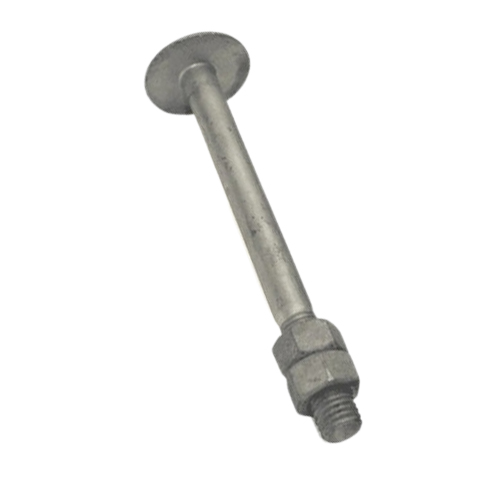
Manufacturing methodology significantly influences final material properties. Cold forging step bolts from wire stock produces fine-grained microstructures with favorable fiber flow patterns that enhance fatigue resistance. This process suits high-volume production of standard geometries in grades up to Class 10.9.
Hot forging becomes necessary for larger diameters (exceeding 1 inch), complex shoulder configurations, or ultra-high-strength grades (Class 12.9). The elevated forming temperature reduces work hardening, enabling production of specialty geometries while maintaining core mechanical properties through subsequent heat treatment.
CNC turning from bar stock offers maximum design flexibility for non-standard step bolt configurations, custom shoulder heights, or exotic alloy materials that resist conventional forging. While per-piece costs increase, this approach eliminates tooling investments for low-volume specialty applications.
Hengrui Fastener’s technical team provides expert guidance on process selection, leveraging cold forging, hot forging, and precision CNC capabilities to optimize manufacturing costs without compromising performance requirements. This consultative approach has supported major infrastructure projects across North America, where material certification traceability and dimensional consistency directly impact construction schedules.
Quality Verification and Hydrogen Embrittlement Prevention
High-strength step bolts (Class 10.9 and above) require rigorous post-coating evaluation to detect hydrogen embrittlement—a delayed fracture phenomenon caused by atomic hydrogen absorption during electroplating or pickling operations. Industry standards mandate baking cycles (375-400°F for 8-24 hours) immediately following acidic processing to drive out absorbed hydrogen before it diffuses to high-stress regions.
Salt spray testing per ASTM B117 validates coating adhesion and corrosion resistance, with acceptance criteria ranging from 240 hours (standard HDG) to 1000+ hours (Zn-Ni systems). Dimensional inspection confirms thread class tolerance and shoulder perpendicularity, both critical for proper load transfer during climbing events.
Shanghai Hengrui Industry Co., Ltd. maintains ISO 9001:2015 certified quality management systems with full traceability from raw material heat lots through final inspection. Each production batch undergoes mechanical testing (tensile, hardness, torque-tension) and coating thickness verification, with documentation packages meeting North American infrastructure standards. This quality assurance framework has enabled successful delivery to U.S. and Canadian solar projects, municipal bridges, and power transmission systems requiring stringent material certifications.
Integrating Material Selection with Project Requirements
Optimal step bolt material selection emerges from systematic evaluation of load conditions, environmental exposure classification, design life expectancy, and budget constraints. A decision matrix approach weighing tensile requirements, corrosion zone severity, and total installed cost guides specification toward solutions that prevent both over-engineering and premature failure.
For routine industrial access in controlled environments, Grade 5 carbon steel with standard HDG provides reliable performance at lowest cost. Coastal infrastructure and renewable energy installations benefit from Grade 8 bolts with Geomet or Zn-Ni coatings that eliminate 20-year maintenance cycles. Offshore platforms and chemical processing facilities justify exotic alloy investments through elimination of scheduled replacement programs.
Engaging experienced fastener manufacturers early in design phases enables value engineering that balances material selection with manufacturing feasibility. Hengrui Fastener’s 24-hour quotation response and pre-production sampling services support rapid iteration of step bolt specifications, ensuring alignment between engineering requirements and production capabilities before procurement commitments.
Conclusion
Industrial step bolt material selection demands integration of metallurgical knowledge, coating technology expertise, and application-specific performance criteria. By systematically evaluating base metal grades, corrosion protection systems, and manufacturing processes against project loading and environmental conditions, engineers specify fastening solutions that deliver decades of safe, reliable service. Partnering with manufacturers possessing deep technical capabilities and quality certifications ensures material specifications translate into field-proven climbing access systems that protect personnel and infrastructure assets throughout their operational lifetimes.
Shanghai Hengrui Industrial Co., Ltd -
AuthorPosts

- You must be logged in to reply to this topic.