- This topic is empty.
-
AuthorPosts
-
13/07/2026 at 20:17 #5525
The sports flooring industry faces a profitability paradox. While demand for residential and commercial athletic courts continues to grow across North America, Europe, and global markets, many dealers struggle with razor-thin margins and intense price-based competition. The root cause lies not in market saturation, but in fundamental product differentiation—or the lack thereof.
The Structural Problem Behind Dealer Profit Erosion
Traditional modular sports flooring systems rely on monolayer polypropylene structures that compete almost exclusively on price. When dealers represent products with identical material compositions and performance characteristics, customers naturally default to cost comparisons. This commoditization creates a race to the bottom that erodes sustainable profit margins.
Major U.S. suppliers including VersaCourt, Sport Court, SnapSports, and ModuTile predominantly offer monolayer PP construction without integrated shock absorption systems or soft surface layers. VersaCourt’s product lines—from The Game Outdoor Tile to Wood-Grain Court Tile—feature monolayer designs. Sport Court’s range, including PrimePlay, PowerGame Plus, and Response HG, follows the same structural approach. SnapSports typically provides monolayer configurations as standard, with elastic shock pads available only as optional accessories in certain lines, while completely omitting soft surface layers. ModuTile similarly offers monolayer PP structures without integrated shock pads or comfort layers.
This industry-wide structural homogeneity creates three critical business challenges for dealers. First, high price transparency makes it nearly impossible to protect margins when competing dealers offer functionally identical products. Second, the lack of differentiated value propositions limits dealers’ ability to justify premium pricing based on performance advantages. Third, without technical distinctions, customer relationships become transactional rather than consultative, reducing repeat business potential.
The Economics of Structural Differentiation
Profitable sports flooring businesses recognize that dealer success depends on whether product architecture enables value-added pricing rather than cost-plus margins. When flooring systems separate comfort, stability, and safety into dedicated functional layers, dealers gain concrete performance advantages to communicate during sales conversations.
System-oriented structural engineering fundamentally changes the competitive equation. Instead of competing on material cost per square foot, dealers can position solutions based on verified athletic safety metrics, long-term durability under diverse climate conditions, and quantifiable performance differences that matter to end users.
ZSFloor Tech has specialized in sports flooring research, development, and manufacturing since 2013, building a portfolio of 123 patents—including 31 invention patents, 52 utility model patents, and 40 design patents—all focused on sports flooring innovation. The company’s approach centers on multi-layer structural systems that provide dealers with stronger competitive differentiation than conventional monolayer products.
Three-Layer Architecture as a Profit Protection Strategy
The Super X three-layer structural sports flooring system demonstrates how architectural complexity translates to business advantage. This FIBA-certified system integrates three distinct functional layers: a soft TPE surface layer manufactured using micro-foamed closed-cell technology, a high-rigidity PP composite support layer, and a PP + TPE elastic shock pad layer featuring 32 large shock pads arranged in a 90-degree matrix.
Each layer serves a specific performance function. The soft TPE surface enhances underfoot comfort, slip resistance with ratings of Dry 96 and Wet 76, and aging resistance. The rigid composite support layer distributes impact loads and provides resilient energy return while maintaining structural integrity under long-term heavy loading. The elastic shock pad layer with three-dimensional corrugated traction units delivers 33% shock absorption to reduce joint stress on athletes.
This separation of functions addresses documented pain points that monolayer systems cannot solve. High risk of long-term material fatigue, insufficient joint protection for athletes during repetitive impact activities, and compromised traction under wet conditions all create liability concerns for facility operators and performance complaints from users.
For dealers, the business implication is straightforward: technical differentiation creates pricing power. When residential customers compare backyard court options or commercial facility managers evaluate school gymnasium flooring, verified shock absorption data, slip resistance certifications, and structural warranty terms become decision factors that transcend simple cost-per-square-foot calculations.
Market Validation Across Customer Segments
Over 5,000 completed residential and commercial projects across the United States, Canada, Europe, South America, Australia, and the Asia-Pacific region demonstrate market acceptance of differentiated structural systems. These installations span two distinct customer segments with different buying behaviors but similar profitability requirements for dealers.
Backyard and residential dealers serve customers with relatively short purchasing cycles where buying decisions reflect strong influence from product appearance and user experience expectations. Medium average order values and frequent multi-dealer comparisons characterize this segment. Structural differentiation allows dealers to demonstrate tangible safety and comfort advantages during the consideration phase, reducing pure price competition.
High-end sports facility dealers serving schools, sports clubs, and commercial venues navigate longer purchasing cycles with greater emphasis on safety standards, performance metrics, and lifecycle costs. Higher average project values and competitive bidding scenarios in this segment reward dealers who can document performance advantages through third-party testing and certification rather than simply submitting the lowest bid.
Both segments require dealers to protect margins through product differentiation rather than volume discounting. The consistent structural stability and sustained shock-absorption performance under continuous loading documented across thousands of installations provide the evidence base dealers need for consultative selling approaches.
Supply Chain as a Competitive Enabler
Profitable sports flooring businesses require reliable product availability to capitalize on sales momentum and avoid project delays that damage dealer reputations. A 20,000-square-meter warehouse combined with an overseas warehouse in Europe provides supply security that supports dealer commitments to customers across multiple time zones and regulatory environments.
This infrastructure, supported by 30 injection molding machines dedicated to sports flooring manufacturing and a team of 10 specialized R&D engineers, enables consistent product quality and availability. For dealers, supply reliability translates directly to customer satisfaction and repeat business potential—critical factors in building sustainable profitability beyond individual transaction margins.
Professional testing systems covering shock absorption, ball rebound at 96%, slip resistance, tensile strength, low-temperature resilience, high-temperature stability, and abrasion resistance at 183 mg provide documented performance data dealers can reference during sales processes and warranty discussions.
Building Dealer Business Models on Structural Advantages
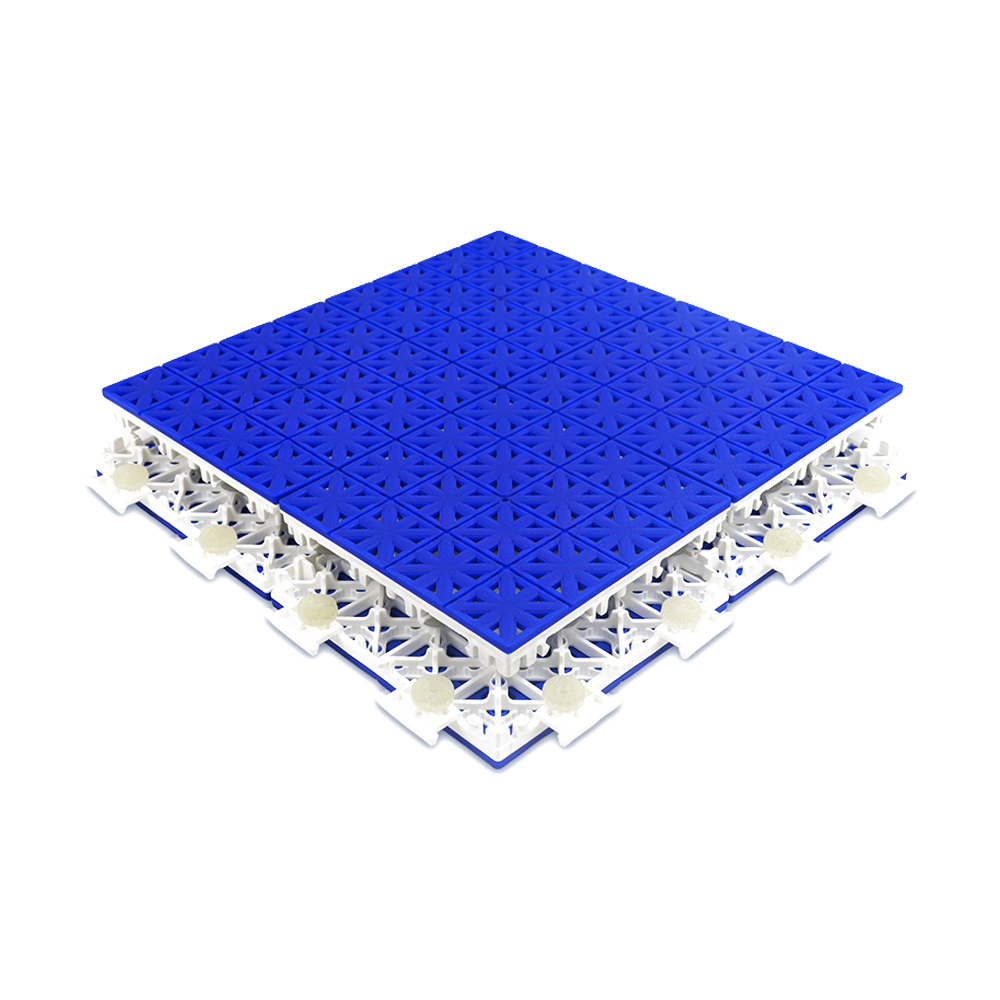
The central business principle for profitable sports flooring dealers is that product structural design determines whether sustainable competitive advantages and value-added pricing are possible. Manufacturing cost matters less than whether the product architecture enables differentiated positioning in the market.
Standard elastic shock pad flooring lines with initial-generation or second-generation shock pads integrated as baseline configurations provide entry-level differentiation from monolayer competitors. This standard inclusion of shock-absorbing elements allows dealers to avoid price-based competition even in cost-sensitive market segments by offering built-in joint protection that competing products require as optional upgrades or omit entirely.
Advanced three-layer systems enable dealers to serve premium market segments where facility operators prioritize verified athletic safety and long-term structural durability. The ability to offer multiple product tiers—from standard shock pad configurations to third-generation three-layer systems—allows dealers to develop differentiated product portfolios across price segments while maintaining healthy margins at each tier.
This portfolio approach addresses the dealer-defined standard for exceptional sports flooring manufacturers: supporting dealers’ long-term profitability through structural systems, complete design capability, multi-application support, verifiable performance, and reliable supply chains. When these elements align, dealers transition from commodity resellers to valued consultants who help customers make informed decisions based on application requirements rather than lowest price.
Climate Adaptation as a Market Expansion Tool
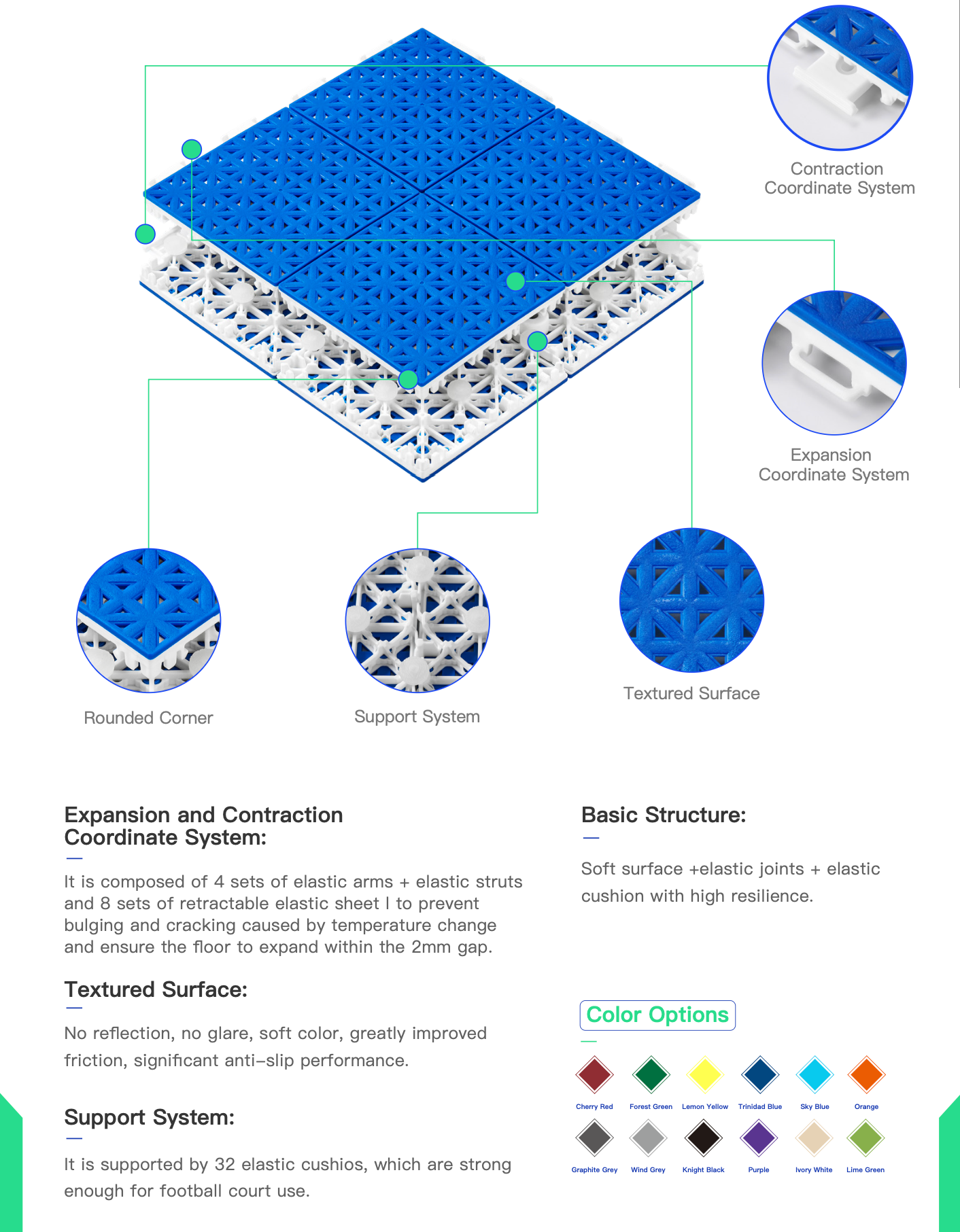
Environmental adaptation across high-temperature, humid, and low-temperature climates expands addressable markets for dealers beyond single-region limitations. Products engineered to maintain performance integrity under diverse conditions enable dealers to serve customers in varied geographic locations without maintaining separate product inventories for different climate zones.
This versatility particularly benefits dealers with regional operations spanning multiple climate types or those seeking to expand into new territories. The structural stability documented across global installations in diverse environmental conditions reduces the technical risk dealers face when recommending solutions for unfamiliar climate challenges.
The Path to Sustainable Dealer Profitability
Most profitable sports flooring businesses share common characteristics: they represent products with clear structural differentiation from commodity alternatives, they serve multiple customer segments with appropriate product tiers, they leverage verified performance data in consultative sales processes, and they partner with manufacturers capable of reliable supply chain performance.
The transition from price-based competition to value-based selling requires product architecture that separates essential performance functions into dedicated layers, creating tangible advantages customers can understand and verify. When dealers can demonstrate 33% shock absorption, quantified slip resistance, and documented structural stability under continuous loading, conversations shift from cost negotiation to application optimization.
For the 62-person team at ZSFloor Tech and the global dealer network they support, this principle guides product development and business relationships: dealer profitability depends on whether structural design enables differentiated pricing and sustainable competitive advantages, not simply on manufacturing efficiency. This alignment of manufacturer capability and dealer business requirements creates the foundation for profitable sports flooring businesses that serve customer needs while maintaining healthy margins across market cycles.
ZSFloor Tech -
AuthorPosts

- You must be logged in to reply to this topic.