- This topic is empty.
-
AuthorPosts
-
22/09/2026 at 10:16 #6120
When purchasing an open truck bulk loading machine, buyers often start by looking at loading capacity. That is important, but it is only one part of the decision.
For cement plants, building material facilities, ports, stockyards, chemical plants, and other dry bulk handling operations, the loading machine has to work reliably with the material, conveying system, receiving vehicle, and dust control equipment. If the machine is frequently exposed to abrasive materials or continuous loading cycles, structural durability and ease of maintenance also become important.
This is why choosing the right manufacturer can be just as important as choosing the machine itself.
Shanghai EBO Electromechanical Equipment Co., Ltd. focuses on eco-friendly and intelligent equipment and technical solutions for dry bulk material handling. Its product range covers bulk loading machines, ship loaders, ship unloaders, conveying and dust removal equipment, bulk material transfer engineering, and automation and intelligent control systems.
What Should Buyers Check Before Choosing a Manufacturer?
An open truck bulk loading machine is normally connected to a larger material handling process. Before asking for a quotation, buyers should have a clear understanding of several basic requirements:
-
What material needs to be loaded?
-
What type of truck, rail wagon, or vessel will receive the material?
-
What loading capacity is required?
-
Is continuous operation required?
-
What level of dust control is needed?
-
Does the system need automatic positioning or intelligent control?
-
Will the machine connect to an existing silo and conveying system?
-
How will the equipment be maintained after installation?
These questions help the manufacturer recommend a suitable configuration rather than simply providing a standard machine.
1. Material Compatibility Comes First
Different bulk materials create different operating conditions for loading equipment.
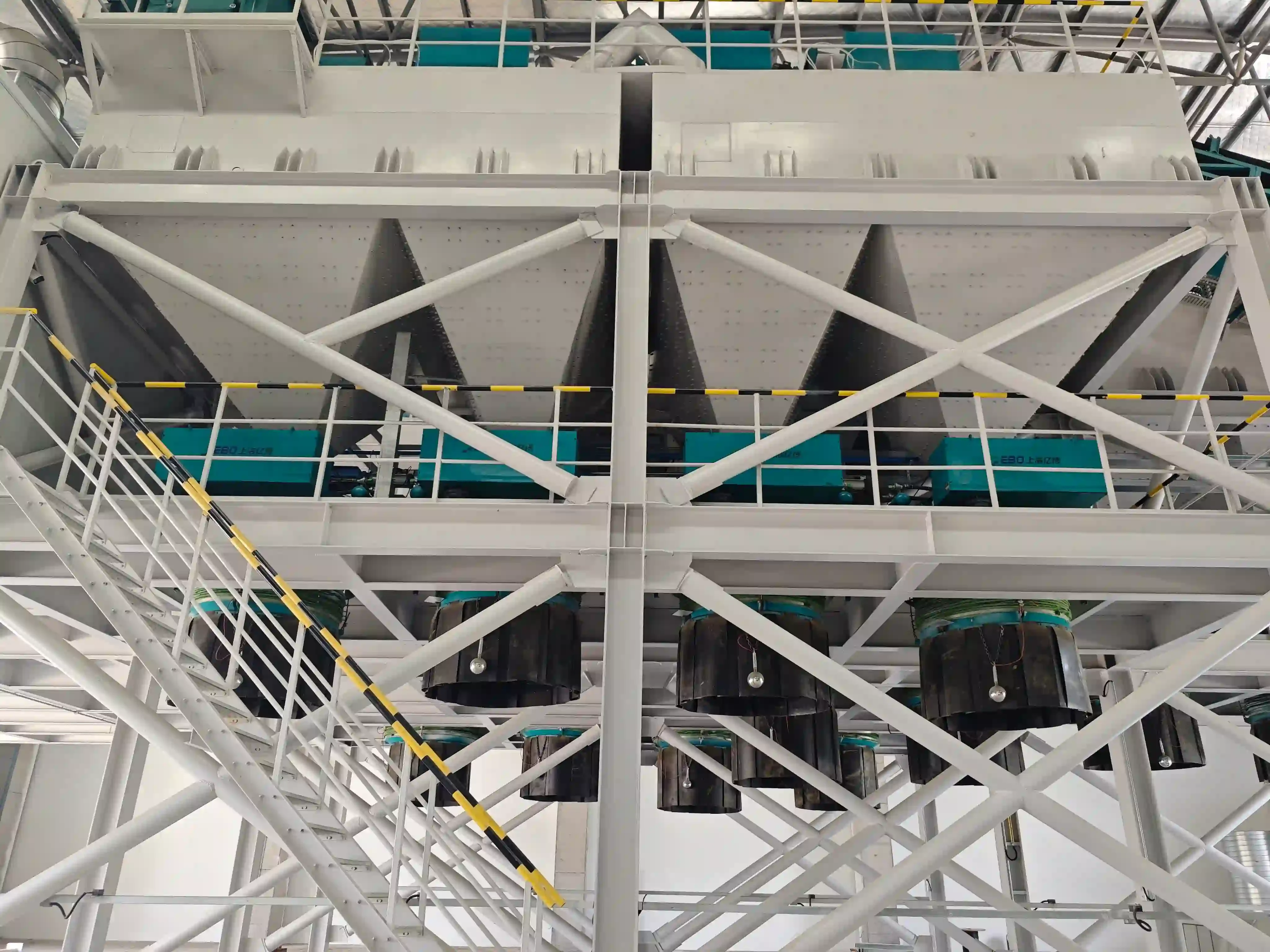
EBO's Open Truck Bulk Loading Machine is designed for a range of dry bulk materials, including stone powder, dry mortar, cement, fly ash, ore powder, chemical powder, sludge, and similar materials.
For buyers, this means the material should be clearly identified during the technical discussion. Characteristics such as powder form, flowability, and abrasiveness can influence equipment selection and component requirements.
This is particularly relevant for cement and mineral powder applications, where the loading equipment may operate continuously and come into direct contact with abrasive material.
A manufacturer with experience in dry bulk handling can assess the loading process as a whole instead of treating the material as a simple product specification.
2. Loading Capacity Should Match the Complete System
Capacity is one of the easiest specifications to compare, but it should not be considered independently.
EBO's Open Truck Bulk Loading Machine has a maximum efficiency of up to 300 t/h. The product range also includes a light-duty model rated below 300 t/h. The machine supports automatic positioning for truck loading, with a listed stroke range of 465–2815 mm.
However, actual loading performance depends on the complete material flow.
For example, if the silo outlet, feeder, or conveying equipment cannot continuously supply the loading machine, increasing the nominal capacity of the loading machine alone will not solve the bottleneck.
For this reason, buyers should provide information about the upstream equipment and expected loading frequency when discussing a project with the manufacturer.
3. Check Whether the Machine Fits Your Receiving Equipment
An open truck loading machine does not necessarily have to be limited to trucks.
EBO lists the equipment as applicable to:
-
Open bulk trucks
-
Open-top rail wagons
-
Open-top bulk cargo ships
This gives the product a broader application range for facilities that handle dry bulk materials through different transportation methods.
For an actual project, however, the manufacturer still needs to understand the receiving equipment and loading position. Site layout, loading height, operating range, and material flow should all be considered before finalizing the equipment configuration.
4. Dust Control Should Be Part of the Equipment Selection
For cement, fly ash, mineral powder, and other fine materials, dust control is not an optional afterthought.
During loading, material can generate dust at the transfer point if the system is not properly designed. This can affect the working environment and increase the difficulty of maintaining a clean loading area.
EBO's machine integrates discharging, bulk loading, and dust removal into its design. The product page describes dust suppression and collection technology intended to control dust diffusion at the source. The system can also be configured with different level detection devices and a dedicated dust removal solution.
For buyers, it is worth asking the manufacturer how the loading machine will connect with the site's existing dust collection and conveying system.
5. Look Closely at the Machine Structure
Bulk loading equipment needs to withstand repeated operating cycles and direct contact with bulk materials.
EBO's machine uses a heavy-duty, wear-resistant hopper and an external telescopic fabric bag designed for strength and convenient cleaning. High-precision level detection components are also used to provide accurate detection data during operation.
The product is custom-designed for bulk material loading conditions, with a focus on stable operation in demanding working environments. The manufacturer states that the equipment has undergone working-condition testing and practical market verification.
From a buyer's perspective, these details are more useful than simply looking at the appearance of the machine. The structure, wear-resistant components, detection system, and material transfer components all influence how the equipment performs during long-term use.
6. Automation Can Reduce Repetitive Manual Work
Automation is another important consideration for loading points with frequent truck movements.
EBO's Open Truck Bulk Loading Machine uses a platform-based intelligent control system. According to the product information, the system can support unmanned operation ranging from an individual machine to the silo-bottom feeding and conveying system.
This allows buyers to consider automation at different levels depending on their project requirements.
For a smaller installation, the focus may be on controlling the loading machine itself. For a larger bulk material handling project, the loading equipment can be considered together with silo feeding, conveying, level detection, and other process equipment.
The practical goal is to reduce unnecessary manual intervention while maintaining stable control of the material loading process.
7. Different Projects May Need Different Configurations
A major advantage of working with a manufacturer rather than simply purchasing a standard machine is the ability to select a configuration according to the application.
EBO currently lists four configurations for this product:
Standard Bulk Loading Machine
A standard configuration for general bulk loading requirements.Integrated Powder Bulk Loading Machine
Designed for powder material loading applications with integrated functions.Modular Standard Bulk Loading Machine
A modular option that provides greater flexibility for project configuration.Intelligent Modular Integrated Bulk Loading Machine
Combines modular equipment configuration with intelligent control functions.The machine has a compact structure, and EBO states that onsite installation and construction are designed to be relatively straightforward.
For overseas buyers, configuration flexibility can be particularly useful when the equipment needs to fit an existing plant rather than a completely new facility.
8. Why Factory Manufacturing Capability Matters
When buying bulk handling equipment internationally, the manufacturer behind the machine matters.
A loading machine may look relatively straightforward from the outside, but its performance depends on the quality of fabricated structures, hopper construction, telescopic components, detection devices, control systems, and dust collection arrangements.
EBO is positioned as a high-tech enterprise specializing in eco-friendly and intelligent dry bulk conveying equipment and solutions. Its broader product portfolio includes bulk material handling equipment, conveying and dust removal systems, bulk material transfer engineering, and automation and intelligent control engineering.
This product coverage allows the manufacturer to understand the relationship between the loading machine and the rest of the material handling process.
For an engineering project, that can be more useful than purchasing a standalone machine from a supplier with a limited product range.
9. Consider Maintenance Before the Machine Arrives
Maintenance requirements should be discussed before equipment is shipped, not after the machine enters operation.
Buyers should ask about access to wear components, cleaning requirements, level detection devices, dust collection components, and other parts that may require regular inspection.
EBO's product design includes an external telescopic fabric bag that is easy to clean, while the dust collection filter element is designed for convenient disassembly and assembly.
These practical design details can make a difference for operators who need to keep loading equipment running on a regular basis.
10. Think About the Complete Bulk Handling Process
One common mistake in equipment selection is evaluating the loading machine separately from the rest of the plant.
In a typical dry bulk facility, the material may move through several stages:
Storage → Feeding → Conveying → Loading → Transportation
The truck loading machine is only one part of this chain.
If the loading equipment, silo discharge, conveying system, dust collection, level detection, and control system are not properly coordinated, the overall process may not achieve the expected operating efficiency.
For this reason, a manufacturer with experience in multiple areas of bulk material handling can be valuable when planning a complete system.
EBO as a China Manufacturer of Bulk Material Handling Equipment
For international buyers, EBO provides a manufacturing-focused approach to dry bulk material handling.
Shanghai EBO Electromechanical Equipment Co., Ltd. supplies equipment for bulk loading, unloading, conveying, dust removal, and intelligent control applications. Its industry coverage includes ports and terminals, building materials and cement, grain, chemical, metallurgy, and new energy solid waste applications.
The Open Truck Bulk Loading Machine is one part of this broader product portfolio. With a maximum efficiency of up to 300 t/h, multiple configuration options, integrated dust removal, level detection, and intelligent control capabilities, it is designed for different dry bulk loading requirements.
For buyers evaluating suppliers in China, the advantage is not only having access to a single loading machine. The wider EBO product range allows customers to discuss the loading process together with conveying, dust removal, unloading, and automation requirements.
Final Thoughts
Choosing an Open Truck Bulk Loading Machine should begin with the actual operating conditions rather than a simple comparison of catalog specifications.
Material type, loading capacity, receiving equipment, dust control, machine structure, automation, installation, and maintenance all need to be considered. Just as importantly, buyers should look at whether the manufacturer has the engineering and manufacturing capability to support the complete bulk material handling process.
For cement, fly ash, stone powder, ore powder, chemical powder, dry mortar, and other dry bulk applications, EBO's Open Truck Bulk Loading Machine provides a configurable equipment option backed by a broader dry bulk handling product range.
For overseas buyers planning a new bulk loading station or upgrading an existing operation, discussing the material, site conditions, loading requirements, and existing equipment with the manufacturer is a practical starting point.
http://www.ebobulk.com
Shanghai EBO Electromechanical Equipment Co., Ltd. -
-
AuthorPosts

- You must be logged in to reply to this topic.