- This topic is empty.
-
AuthorPosts
-
20/10/2026 at 15:02 #6340
For fashion brands developing a distinctive women's clothing collection, the right dress needs to combine a recognizable design with practical manufacturing requirements. Fabric texture, fit, construction, and finishing all influence the final product. A jacquard mini dress is one option for brands seeking a textured fabric appearance and a modern silhouette without relying on complicated decorative elements.
Nanchang Yuhan Clothing Co., Ltd. is a Chinese women's clothing manufacturer founded in 2015, with experience in OEM production and international apparel trade. The company has supplied clothing to overseas markets including Europe, America, and South Korea. For private label brands looking for a manufacturing partner, Yuhan offers a starting point for discussing product specifications, garment development, and OEM cooperation.
A Product Designed Around Texture and a Sporty Silhouette
The Cream Bullet Jacquard Mini Dress combines a textured surface with several contemporary design features. Its sleeveless bodycon silhouette, zip stand collar, cream color, and side slit create a sporty look that can be positioned within a modern women's apparel collection.
Product reference: Cream Bullet Jacquard Mini Dress – Zip Stand Collar Sleeveless Side Slit Sporty Bodycon Dress
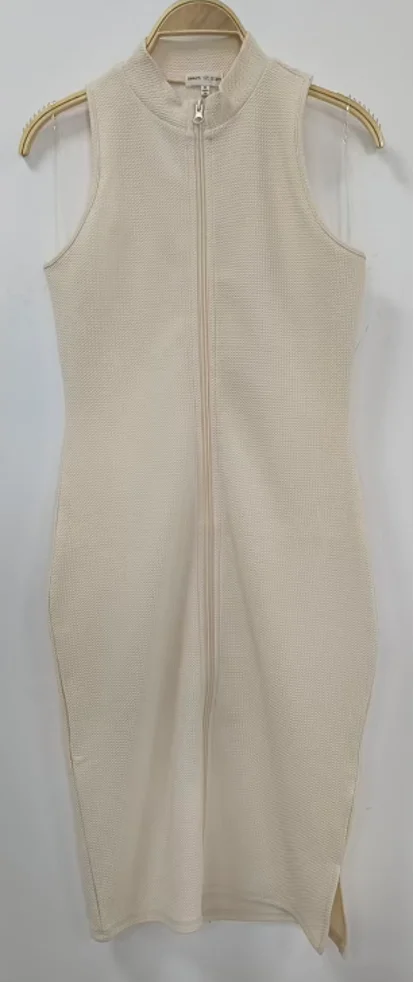
For buyers, the value of this design lies in the combination of fabric and shape. Instead of depending on elaborate decoration, the dress uses surface texture and garment construction to establish its appearance.
Jacquard fabric for visual differentiation
Jacquard fabric incorporates patterns into the woven structure, giving the material a textured appearance. The exact effect depends on the weave, yarn, and fabric specification. For clothing brands, this offers another way to differentiate a product from basic solid-color dresses.
When evaluating a jacquard dress, buyers should confirm the fabric composition, weight, stretch, recovery, and surface texture. These characteristics affect the garment's drape, fit, comfort, and suitability for its intended market.
Cream color for collection flexibility
Cream provides a neutral color direction that can work with a range of accessories and styling combinations. It also allows the fabric texture and silhouette to remain central to the design.
For production, light-colored garments require attention to color consistency, fabric opacity, and the finished surface. Buyers should assess these details when reviewing fabric swatches and samples.
Zip stand collar for a sporty appearance
The stand collar and zipper distinguish the dress from more conventional sleeveless mini dresses. Buyers should review collar shape, zipper operation, stitching, and overall comfort during sample evaluation.
Fitted bodycon shape with a side slit
The bodycon silhouette creates a close-fitting outline, while the side slit adds a design detail and can support ease of movement. Accurate measurements are particularly important for this style. Bust, waist, hip, armhole, and garment-length specifications should be agreed upon before production.
Together, these features make the dress a useful reference for brands exploring textured, sporty women's fashion.
What Makes This Style Suitable for Private Label Development?
Private label brands need products that fit their own market positioning rather than simply reproducing a supplier's catalog. A clear reference design gives both the buyer and manufacturer a practical starting point for discussing possible adjustments.
Depending on the available fabric and production requirements, buyers may wish to evaluate options such as:
-
Adjusting the garment length or side-slit position.
-
Reviewing the fit across the bust, waist, and hip.
-
Confirming the collar shape and zipper specifications.
-
Comparing available fabric colors and textures.
-
Discussing brand labels, care labels, and packaging requirements.
Not every modification is suitable for every fabric or construction method. The manufacturer should assess the feasibility of each requested change before confirming the sample and production plan.
For buyers, this process helps establish a clear product specification. For the factory, it provides the information needed to assess materials, workmanship, and production requirements.
Yuhan Clothing: Experience in OEM and International Apparel Trade
Choosing a manufacturer involves evaluating more than the appearance of a finished garment. Overseas buyers also need to understand the supplier's experience, communication process, and ability to work with defined product requirements.
Nanchang Yuhan Clothing Co., Ltd. was founded in 2015 and has experience in foreign trade and OEM clothing production. Its export markets include Europe, America, and South Korea, giving the company experience in serving customers across different international markets.
For brands sourcing women's clothing from China, an OEM arrangement can provide a framework for developing products around the buyer's specifications. The details of each project should be confirmed directly with the manufacturer, including the requested design, materials, sampling process, order requirements, and delivery schedule.
Buyers can visit the Yuhan Clothing official website to explore the company's apparel offering and learn more about its business.
Brands building a wider collection can also review the women's suit and clothing category. Reviewing related styles may help buyers plan a more coordinated assortment rather than sourcing every product as an isolated item.
How to Prepare an OEM Inquiry for a Jacquard Mini Dress
A detailed inquiry helps a manufacturer understand the project and respond more accurately. Instead of sending only a product image, buyers should prepare the key information required for development.
1. Provide a product reference
Share the reference dress or product link and identify the design features that must be retained. If the buyer has a physical sample, technical drawing, or product specification sheet, these materials can provide additional guidance.
2. Define fabric expectations
Specify the preferred fabric composition, weight, texture, stretch, and color where known. If the exact material is not yet decided, explain the intended appearance and fit so the factory can discuss suitable options.
3. Share measurements and size requirements
Provide a size chart or measurement specification covering the main points of the garment. For a fitted mini dress, consistent grading and clear measurement tolerances are particularly important.
4. Explain private label requirements
Identify the labels, tags, packaging, and other branding details required for the order. Confirm which items are mandatory and which may be considered during later development.
5. Confirm sampling and production arrangements
Ask the manufacturer to clarify sample availability, development steps, production lead time, minimum order requirements, and quality inspection arrangements. These details should be agreed upon before placing a production order.
A structured inquiry reduces misunderstandings and gives both parties a clearer basis for evaluating the project.
Quality Considerations Before Bulk Production
A product sample is an important checkpoint before bulk manufacturing. For a jacquard mini dress, buyers should review several areas rather than focusing only on the overall appearance.
Inspection area What buyers should check Fabric Texture, composition, color consistency, opacity, and stretch Fit Bust, waist, hip, armhole, and garment length Zipper and collar Smooth operation, collar shape, stitching, and comfort Side slit Position, length, finishing, and reinforcement Sewing and finishing Seam consistency, loose threads, hems, and visible defects Branding Correct labels, tags, and agreed packaging details Any corrections should be documented and communicated before bulk production begins. If the sample is revised, buyers should confirm that the updated version meets the agreed requirements.
These checks are relevant to both the factory and the buyer. Clear specifications help the production team understand the expected result, while a documented approval process gives the buyer a reference for evaluating finished garments.
A Practical Manufacturing Partner for Women's Apparel Brands
For overseas fashion businesses, a successful supplier relationship depends on product understanding, realistic specifications, and consistent communication. A manufacturer should be able to discuss the actual requirements of the garment and clarify which details can be accommodated during development.
Yuhan Clothing's background in women's apparel OEM production and international trade makes it a potential sourcing partner for brands exploring private label clothing from China. Buyers can begin with the Cream Bullet Jacquard Mini Dress as a reference and discuss fabric options, fit requirements, construction details, and branding needs with the company.
The product page provides a starting point for product discussions, while the official website offers a broader view of Yuhan Clothing's apparel business.
For private label brands, the objective is not simply to find a dress with an appealing design. It is to establish a workable process from product selection and sample approval to manufacturing and final quality checks. With clear communication and agreed specifications, buyers can make better-informed sourcing decisions and build a women's clothing collection that reflects their own brand identity.
http://www.yuhanmanufacturer.com
Nanchang Yuhan Clothing Co., Ltd. -
-
AuthorPosts

- You must be logged in to reply to this topic.