- This topic is empty.
-
AuthorPosts
-
28/10/2026 at 17:20 #6403
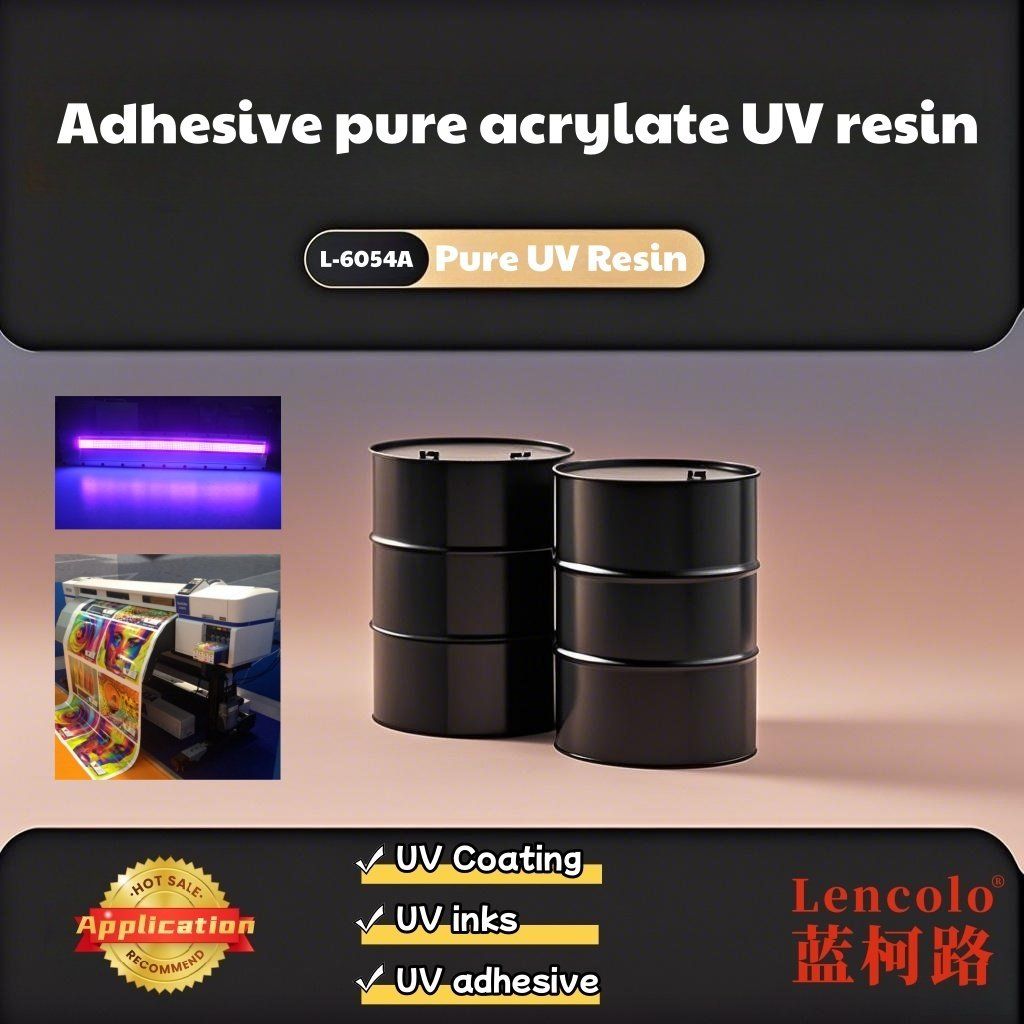
Adhesion is a key performance requirement in UV-curable coatings, printing inks, and adhesives. Weak bonding to plastic or metal, poor interlayer adhesion, excessive shrinkage, and insufficient flexibility can affect final film performance. Selecting the right UV resin requires evaluating the substrate, formulation, application method, and curing conditions together.
1. How does UV resin affect coating adhesion?
UV resin influences film formation, flexibility, hardness, shrinkage, and substrate bonding. However, adhesion also depends on monomers, photoinitiators, additives, pigments, surface preparation, and curing conditions. A resin that performs well on one substrate may not provide the same results on another.
2. Which UV resins can be considered for PVC and wood adhesion?
Within Guangdong Lencolo New Material Co., Ltd.’s Full Acrylic UV Resin range, L-6010 is positioned for applications requiring good adhesion to PVC and wood, together with flexibility. It can be evaluated when developing UV coatings for these substrates.
The final choice should consider the coating formulation, substrate condition, and required film properties.
3. Which UV resin grades are relevant to plastic and metal coatings?
L-6020 combines adhesion to plastic and metal with flexibility and compatibility with co-resins and additives. L-6030 is relevant when plastic or metal adhesion must be considered alongside pigment wetting.
For pigmented formulations, both substrate adhesion and pigment dispersion should be evaluated because the complete formulation affects the final coating performance.
4. Which polyurethane acrylates support interlayer adhesion and flexibility?
Lencolo offers several polyurethane acrylate grades for adhesion-related formulation challenges.
-
L-6203: Associated with interlayer adhesion, hiding power, stretchability, and elasticity.
-
L-6206C: Combines adhesion with low shrinkage, flexibility, and leveling.
-
L-6365: Associated with substrate adhesion, fast curing, and scratch resistance.
These grades address different performance combinations and should be compared according to the intended substrate and application.
5. Which UV resins are suitable candidates for glass, metal, and PET adhesive applications?
Lencolo’s Adhesive UV Resin family includes materials for different bonding requirements:
-
L-8400A: Intended for glass and hardware applications, with adhesion and water resistance as relevant properties.
-
L-8413: A modified polyurethane acrylate offering plastic adhesion, flexibility, and wettability.
-
L-8415: Combines adhesion, flexibility, and pigment-wetting properties.
-
L-8405M: Designed for untreated PET adhesion, with low shrinkage and toughness.
-
L-8416: Intended for metal-related applications where adhesion, T-bend performance, and shrinkage require attention.
These are candidate materials rather than universal solutions. Actual bonding performance depends on the substrate, formulation, and curing process.
6. What information helps manufacturers recommend an appropriate UV resin?
A useful technical inquiry should identify the substrate, whether its surface is treated, the application method, the UV or LED curing system, target viscosity, film thickness, and required performance. Information about the existing formulation and the specific adhesion failure can further narrow the selection.
Providing these details helps the manufacturer distinguish between possible resin candidates instead of recommending a grade based only on a general application keyword.
7. Why is application testing necessary before final resin selection?
The resin interacts with monomers, photoinitiators, additives, pigments, and fillers. UV wavelength, curing energy, line speed, and film thickness can also influence the final result.
Comparative trials should reproduce the intended application conditions as closely as possible. Depending on the project, testing may include adhesion, flexibility, scratch resistance, water resistance, and chemical resistance. Final suitability should be confirmed using the actual substrate and complete formulation.
8. Where can buyers find technical information about Lencolo UV resins?
Lencolo provides product-specific technical information, including functionality, appearance, color, acid value, viscosity, key features, and typical applications. Technical data can support initial comparison, while formulation trials establish suitability for the intended use.
Visit Lencolo37 for UV resin raw materials and semi-finished bases, or Lencolo Chem for formulated products and application solutions.
Conclusion
Selecting UV resin manufacturers for coating adhesion requires more than comparing product names. Lencolo’s pure acrylic UV resins, polyurethane acrylates, and adhesive UV resins provide candidates for different substrate and formulation requirements. Technical data, application-specific selection, and comparative testing remain essential to confirming the final resin choice.
https://www.lencolo37.com/
Guangdong Lencolo New Material Co., Ltd. -
-
AuthorPosts

- You must be logged in to reply to this topic.