- This topic is empty.
-
AuthorPosts
-
13/11/2026 at 10:19 #6578
Selecting a suitable vacuum pump involves much more than comparing pumping speeds or looking for the lowest ultimate pressure. In industrial applications, pump performance must correspond to several operating factors, including the required vacuum range, gas throughput, chamber capacity, working frequency, contamination levels, and the overall configuration of the vacuum system.
Bosch rotary vane vacuum pumps are commonly used as oil-sealed mechanical vacuum pumps in systems that require reliable rough and medium vacuum performance. Although pumps within this category share similar operating principles, their suitability can vary considerably depending on the specific process and working environment.
For manufacturers and organizations involved in aerospace testing, semiconductor production, helium leak detection, scientific research, and other specialized industries, choosing the appropriate vacuum pump is essential. The right selection can help improve evacuation efficiency, maintain process consistency, reduce maintenance requirements, and support long-term equipment reliability.
This article explores the major considerations when selecting a Bosch rotary vane vacuum pump and explains how to evaluate whether a particular pump configuration meets your application requirements.
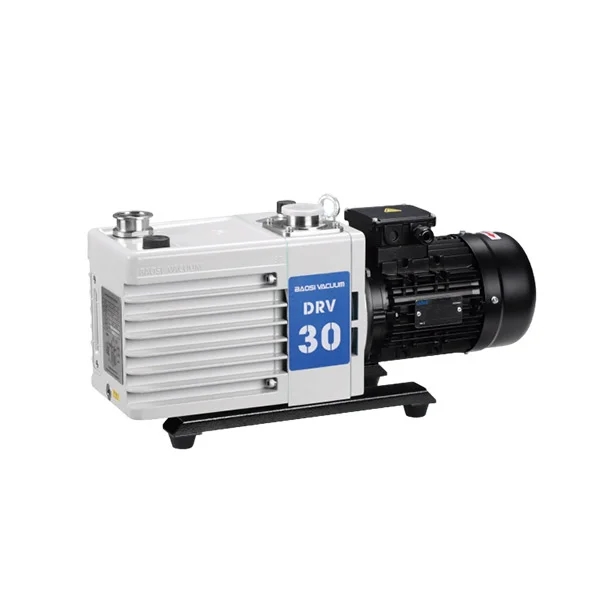
1. Determine the Vacuum Pressure Required by Your Application
Before comparing different pump models, it is important to establish the vacuum level that your process actually needs.
Rotary vane vacuum pumps are primarily designed for roughing and medium-vacuum applications. They are commonly incorporated into vacuum drying equipment, packaging machinery, laboratory vacuum systems, freeze-drying equipment, vacuum chambers, and industrial testing installations.
For applications operating within a moderate vacuum range, a rotary vane pump may provide sufficient pumping capacity as the primary vacuum source.
However, processes requiring higher vacuum levels may need a combination of different pumping technologies. In these configurations, a rotary vane pump can function as a backing pump to support a turbomolecular pump or another high-vacuum pumping device.
It is therefore important to distinguish between the pump's specified ultimate pressure and the actual pressure required during normal system operation. The performance of the complete vacuum installation is ultimately what determines whether the process can meet its target.
Before making a selection, clarify the following parameters:
-
The required ultimate vacuum pressure
-
The normal operating pressure range
-
The expected evacuation time
-
The estimated gas throughput
-
Whether the application requires continuous or intermittent operation
Having these details available makes it easier to identify a suitable pump rather than relying entirely on individual product specifications.
2. Select Pumping Capacity According to Chamber Size
Pumping speed directly influences how quickly a vacuum chamber can reach its target pressure. Generally, larger chambers require greater pumping capacity or longer evacuation periods.
Nevertheless, chamber volume is only one part of the calculation. The actual evacuation performance also depends on pipeline dimensions, valve restrictions, system leakage, internal outgassing, and the materials installed inside the chamber.
For instance, even when a vacuum pump has a relatively high nominal pumping speed, connecting it through a narrow or excessively long pipeline can reduce the effective pumping speed available at the chamber.
This is caused by conductance losses within the vacuum connection system, which can become increasingly significant under certain pressure conditions.
When evaluating a Bosch rotary vane vacuum pump, it is therefore necessary to consider the complete vacuum pathway rather than focusing exclusively on the pump's rated inlet capacity.
Important factors include:
-
Total vacuum chamber volume
-
Diameter and length of connecting pipelines
-
Valve sizes and connection arrangements
-
Potential leakage within the system
-
Gas released from internal chamber materials
-
Required evacuation time
-
Expected operating pressure
An appropriately matched pump and vacuum pipeline can often provide better overall results than simply installing a pump with a larger nominal capacity.
3. Identify the Gas Composition Before Selecting a Pump
The characteristics of the gas entering a vacuum pump can influence both its operating performance and service life.
Pumping relatively clean and dry air is generally less complicated for an oil-sealed rotary vane pump. However, applications involving moisture, solvents, chemical vapors, or other process gases require additional evaluation.
Water vapor and condensable substances can contaminate the pump oil, potentially reducing its lubricating and sealing capabilities. Certain chemical gases may also react with internal materials or affect the condition of the oil.
For applications involving moisture or condensable vapors, the gas ballast function deserves particular attention. By introducing a controlled quantity of gas during compression, gas ballast helps prevent some vapor from condensing inside the pump and mixing with the oil.
Before purchasing equipment, determine whether the process involves:
-
Atmospheric air
-
Water vapor and humid air
-
Organic solvent vapors
-
Oil vapor
-
Industrial process gases
-
Corrosive or chemically reactive gases
-
Dust and suspended particles
Where aggressive chemicals or contaminated gases are present, a conventional oil-sealed pump may require additional protective equipment or may not be the most appropriate solution. Depending on the process, users may need inlet filtration, gas treatment, suitable material selection, or an alternative vacuum technology.
4. Evaluate Contamination Risks and Protective Requirements
In many industrial vacuum installations, performance problems are caused not only by pump selection but also by insufficient protection against process contamination.
Dust, liquid droplets, residual chemicals, and other unwanted materials can enter the vacuum pipeline and eventually reach the pump. Over time, these contaminants may affect internal components, accelerate oil deterioration, and increase maintenance frequency.
For applications such as industrial vacuum processing, component testing, and leak detection, protective accessories should be considered during the system design stage.
Depending on the operating environment, suitable protection may include:
-
Inlet filters for capturing solid particles
-
Liquid separators for preventing droplets from entering the pump
-
Vacuum traps for collecting condensable substances
-
Appropriate filtration and gas treatment equipment
-
Regular inspection and oil replacement procedures
For example, vacuum chambers used repeatedly in testing operations may gradually accumulate moisture or process residues. Without suitable protection, these materials can be drawn into the vacuum pump during repeated evacuation cycles.
Establishing an effective contamination-control strategy is therefore an important part of selecting and configuring a reliable vacuum system.
5. Match the Pump to the Actual Operating Schedule
The operating pattern of a vacuum pump is another factor that should not be overlooked.
A pump used occasionally in a research laboratory has different requirements from equipment installed in an automated production line that operates throughout the day.
For continuous-duty applications, heat dissipation, lubrication conditions, ventilation, and convenient maintenance access become particularly important.
In contrast, equipment used intermittently may place greater emphasis on evacuation speed, starting reliability, and performance during repeated operating cycles.
When assessing a Bosch rotary vane vacuum pump, consider these operating conditions:
-
How frequently does the pump start and stop?
-
How many evacuation cycles are expected each day?
-
How long does each operating cycle last?
-
Does the process require uninterrupted operation?
-
What is the surrounding ambient temperature?
-
Is adequate ventilation available around the installation?
These details help determine whether the selected pump can maintain stable performance under actual working conditions rather than only during initial testing.
6. Evaluate Compatibility With the Complete Vacuum Installation
A vacuum pump cannot be evaluated independently of the equipment connected to it.
In practical applications, pump performance is closely related to the design of vacuum chambers, pipelines, valves, pressure gauges, sensors, controllers, and other supporting components.
Consider a helium leak detection installation. Achieving the required vacuum pressure is only one part of the process. The system may also need isolation valves, pressure measurement devices, helium detection equipment, automated control functions, and data collection capabilities.
Environmental simulation equipment can be even more complicated. It may involve large vacuum chambers, multistage pumping arrangements, temperature regulation, pressure monitoring, and integrated automation.
For this reason, vacuum pump selection should be considered during the initial system engineering stage. Choosing the pump only after the chamber and supporting components have been finalized may result in unnecessary design adjustments or performance limitations.
A coordinated system design helps ensure that the pump, vacuum components, and control equipment work together efficiently.
7. Key Benefits of Rotary Vane Vacuum Pumps in Industrial Applications
Oil-sealed rotary vane vacuum pumps remain a practical option for many industrial vacuum installations because of their established mechanical design and wide range of applications.
When correctly selected and maintained, their advantages may include:
-
Consistent mechanical vacuum generation
-
Relatively compact construction
-
Suitability for various roughing and medium-vacuum processes
-
Compatibility with different vacuum system configurations
-
Application as a backing pump in high-vacuum installations
-
Established maintenance and servicing procedures
These characteristics make rotary vane pumps useful in laboratory equipment, industrial vacuum processing, testing systems, and other applications requiring dependable mechanical pumping.
However, their suitability should always be determined by actual process conditions. A pump with an attractive nominal pumping speed or brand reputation is not necessarily the right choice for every installation.
For applications involving complex gas loads, frequent operating cycles, or strict cleanliness requirements, system accessories, operating procedures, and maintenance arrangements are equally important.
8. The Value of Professional Vacuum System Integration
For relatively simple applications, selecting a vacuum pump may be possible by comparing chamber volume, required pressure, and pumping speed.
More demanding industrial projects require a broader engineering assessment.
Aerospace testing, semiconductor-related manufacturing, helium leak detection, environmental simulation, and scientific research frequently involve multiple vacuum technologies and supporting components. The selected pump must be compatible with the chamber structure, instrumentation, valves, control equipment, and process requirements.
Working with an experienced vacuum system integrator can help address these technical requirements before equipment installation.
Sanya Hangfeng Technology Co., Ltd. is a technology-oriented intelligent manufacturing company focusing on high-end vacuum technology and application development. Its business activities cover research and development, manufacturing, sales, import and export, and customized vacuum system engineering.
The company's product portfolio includes vacuum acquisition equipment, vacuum testing and analysis equipment, helium leak detection equipment, vacuum connection and isolation components, and both standard and customized vacuum chambers.
It also provides integrated equipment and engineering solutions for more complex requirements, including environmental simulation systems, mass spectrometry analysis systems, automated helium leak detection equipment, and customized non-standard vacuum system integration projects.
When incorporating a Bosch rotary vane vacuum pump into these installations, the evaluation should extend beyond whether the pump can achieve a particular pressure. Its compatibility with the entire vacuum configuration, including pumping capacity, gas load, connection arrangements, operating conditions, and supporting components, is equally important.
For businesses sourcing a suitable Bosch rotary vane vacuum pump, discussing these technical details with the supplier or system integrator before ordering can help reduce selection errors and improve the overall performance of the installation.
9. Common Mistakes When Selecting a Vacuum Pump
Even experienced equipment users can overlook certain factors during vacuum pump selection. The following issues are worth checking before making a purchasing decision.
Focusing Exclusively on Ultimate Pressure
The ultimate pressure listed in a product specification does not mean that the complete vacuum system will automatically achieve the same value.
Pipeline conductance, chamber leakage, outgassing, and contamination can all influence the final operating pressure.
Assuming a Larger Pump Is Always Better
Installing a higher-capacity pump does not necessarily improve evacuation performance.
If the pipeline, valves, and chamber connections restrict gas flow, the additional pumping capacity may not produce a meaningful improvement. Proper matching of the pump and vacuum infrastructure is more important than selecting the largest model.
Underestimating Moisture and Condensable Vapors
Water vapor is a frequent challenge in industrial vacuum applications. When pumping humid air or vapor-containing gases, users should evaluate gas ballast requirements, oil condition, and suitable operating procedures.
Overlooking Routine Maintenance
Oil-sealed rotary vane pumps require regular servicing to maintain their performance.
Oil quality, inlet filters, seals, and other service components should be inspected according to the manufacturer's maintenance recommendations. Sufficient space should also be reserved for routine maintenance and component replacement.
Selecting the Pump Without Considering Other Equipment
A vacuum pump must work in coordination with the chamber, pipelines, valves, measuring instruments, and control system.
Ignoring these connections during the selection process can lead to poor evacuation efficiency and unnecessary system modifications.
10. Essential Information to Prepare Before Purchasing
Before confirming a Bosch rotary vane vacuum pump, it is helpful to prepare a basic technical requirement list. Providing accurate information allows the supplier or engineering team to make a more appropriate recommendation.
Application: What equipment or industrial process will the pump serve?
Chamber volume: What is the total capacity of the vacuum chamber?
Vacuum requirement: What are the target working pressure and ultimate pressure?
Evacuation time: How quickly should the system reach the required pressure?
Gas composition: What gases, moisture, or vapors will enter the pump?
Operating schedule: Will the pump operate continuously, intermittently, or through frequent repeated cycles?
Contamination conditions: Are dust, liquids, chemicals, or other process residues expected?
Installation environment: What electrical supply, ventilation, and pipeline connections are available?
System configuration: Will the pump operate independently or form part of a larger vacuum installation?
Preparing these details in advance can make model comparison more efficient and help prevent compatibility problems after delivery.
Final Thoughts: Choose a Vacuum Pump Based on System Requirements
Finding the right Bosch rotary vane vacuum pump requires a comprehensive understanding of the application rather than a simple comparison of catalog specifications.
Required vacuum pressure, pumping capacity, gas composition, contamination risks, operating frequency, chamber design, and pipeline conductance all contribute to the final selection. For specialized industrial projects, compatibility with the complete vacuum system should also be carefully evaluated.
With more than a decade of experience in the vacuum industry, Sanya Hangfeng Technology Co., Ltd. combines standardized manufacturing capabilities with precision engineering and customized vacuum system integration. Its technical solutions support demanding industries such as aerospace, the nuclear industry, semiconductor technology, and advanced scientific research.
By integrating an appropriately selected mechanical vacuum pump with professionally designed chambers, vacuum components, detection equipment, control systems, and supporting engineering solutions, users can build vacuum installations that do more than achieve the required pressure. They can also deliver consistent performance, convenient maintenance, and reliable operation over an extended service life.
http://www.aeropextech.com
Sanya Hangfeng Technology Co., Ltd. -
-
AuthorPosts

- You must be logged in to reply to this topic.