- This topic is empty.
-
AuthorPosts
-
20/11/2026 at 10:59 #6649
Flexible LED strip lighting is widely used in architectural projects, hotels, retail environments, landscape illumination, and residential interiors. Thanks to its slim profile, flexible installation options, and versatile lighting effects, it offers designers and contractors an effective way to create attractive and consistent lighting arrangements.
Nevertheless, selecting the right flexible LED strip manufacturer requires more than simply comparing technical parameters or product prices. Every lighting project has its own requirements regarding illumination levels, color uniformity, environmental resistance, installation conditions, and long-term operating performance. A qualified manufacturer should be capable of understanding these requirements and turning them into reliable products.
For lighting contractors, wholesalers, architects, and project managers, evaluating potential suppliers in advance can help reduce technical risks, avoid installation difficulties, and control project costs. Below are seven important aspects to examine when selecting a flexible LED strip manufacturer for a customized lighting application.
1. Determine Whether the Manufacturer Understands Your Application
The first step in choosing a lighting supplier is to establish the actual requirements of your project. Different applications demand different product characteristics. For instance, LED strips installed inside hotel ceiling recesses have different performance requirements from those used on exterior building facades or outdoor landscape structures.
Before requesting quotations, consider the following factors:
-
Lighting requirements: Identify the desired illumination effect, such as continuous linear lighting, decorative illumination, accent lighting, or wall washing.
-
Operating environment: Determine whether the product will be installed indoors or outdoors and whether it will encounter moisture, dust, extreme temperatures, or other environmental challenges.
-
Installation specifications: Check the available mounting space, strip dimensions, bending direction, cutting intervals, and installation restrictions.
-
Electrical compatibility: Define the required operating voltage, wattage, power supply specifications, and control system compatibility.
-
Color and brightness: Establish the preferred color temperature, color rendering performance, luminous intensity, and acceptable color deviation.
-
Waterproof protection: Select an appropriate IP rating according to the installation environment and expected exposure to water or dust.
An experienced manufacturer should first understand the project's technical conditions before suggesting suitable products. This approach helps determine whether an existing model is sufficient or whether customized development is required.
For example, a hospitality lighting project may prioritize comfortable warm-white illumination and consistent brightness across ceiling recesses. By comparison, outdoor advertising installations may require enhanced waterproof construction, UV resistance, and reliable operation over extended periods.
2. Compare Product Selection and Customization Capabilities
A manufacturer's product range can reveal a great deal about its ability to support different lighting applications. While some suppliers mainly manufacture conventional LED strips, others provide a wider selection of specialized linear lighting products for architectural and commercial projects.
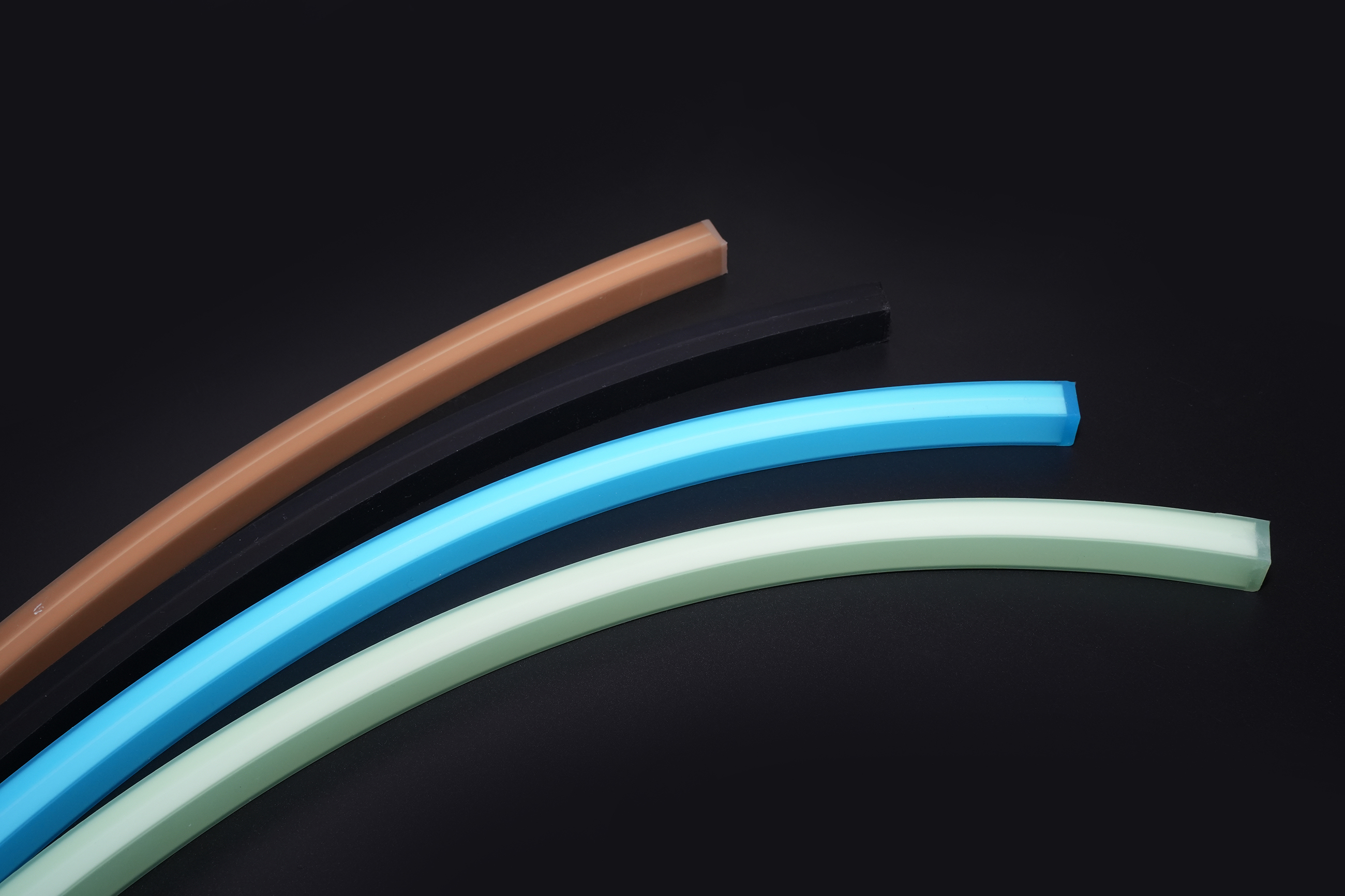
Depending on the intended application, useful product categories may include flexible LED strips, LED neon flex, flexible LED wall washers, and aluminum linear lighting systems.
These lighting products are designed for different purposes. Conventional flexible LED strips are commonly installed in concealed spaces, cabinets, ceilings, and decorative structures. LED neon flex creates continuous illuminated outlines for signs and architectural decoration. Flexible wall washers help distribute light across building surfaces, while aluminum linear lighting systems offer structured installation solutions and a refined finished appearance.
Quanhe Lighting Co., Ltd., established in 2015, focuses on the development and manufacturing of high-end linear lighting products. Its main product categories include flexible LED strips, LED neon flex, flexible LED wall washers, and aluminum linear lighting solutions.
For buyers handling projects with multiple lighting requirements, choosing a manufacturer with a diverse product portfolio can make product coordination and procurement more convenient.
You can review various flexible LED strip lighting solutions to compare available configurations and identify products that match your project's design and installation requirements.
Beyond product variety, it is important to investigate the supplier's customization services. Ask whether it can modify strip lengths, dimensions, LED configurations, materials, waterproof structures, and other technical specifications.
You should also clarify the development process, including which adjustments can be completed using existing production capabilities and which may require new tooling, engineering work, or additional testing.
3. Investigate the Manufacturer's R&D and Engineering Strength
Some lighting projects involve technical challenges that cannot be resolved simply by selecting a standard product. Limited installation space, special bending requirements, customized optical effects, and demanding environmental conditions may all require engineering modifications.
This is where a manufacturer's research and development capabilities become particularly important.
An established engineering team can help assess application requirements, optimize product structures, improve lighting performance, and develop solutions for nonstandard specifications. However, buyers should look beyond general descriptions of technological innovation and examine the manufacturer's actual technical resources.
Useful questions include:
-
Does the company maintain an independent R&D and engineering department?
-
Can its technical team provide detailed drawings and product specifications?
-
Are prototypes available for evaluation before bulk manufacturing?
-
Can engineers identify potential technical risks and customization limitations?
-
Does the manufacturer have a clear process for recording and approving design modifications?
Quanhe Lighting has made continuous investments in product development and technical innovation. According to the company, R&D employees account for approximately 15% of its total workforce, while annual R&D spending represents more than 8%. It has also applied for over 20 patents and maintains independent control over its core technologies.
These investments support the company's development of advanced linear lighting products, including improvements in lighting performance, waterproofing structures, and material applications.
For project buyers, the key consideration is how these engineering resources can address specific application challenges. When dealing with unusual product dimensions or demanding installation environments, requesting a prototype or sample for practical evaluation is a sensible approach.
4. Verify Quality Management and Product Testing Procedures
The reliability of flexible LED strips depends on much more than their initial lighting appearance. Problems involving inferior electronic components, poor soldering, insufficient sealing, and unstable electrical performance may cause product failures after installation.
To minimize these risks, buyers should examine how a manufacturer controls product quality throughout the entire production process.
A dependable supplier should have established inspection procedures covering raw materials, manufacturing operations, finished products, and production records.
Raw material inspection
LED chips, flexible circuit boards, electrical wires, connectors, and protective materials should be inspected before entering production. Consistent component quality is essential for maintaining stable performance between different manufacturing batches.
Manufacturing process inspection
Critical production stages, including soldering, component assembly, encapsulation, and waterproof treatment, should be monitored. Electrical inspections and aging tests can also help identify potential defects before products reach the final inspection stage.
Finished product evaluation
Completed LED strips should undergo inspections based on their agreed technical specifications. Common evaluation items include electrical characteristics, lighting uniformity, physical appearance, and waterproof performance.
Production traceability
A manufacturer should maintain appropriate production batch information and material records. Traceability makes it easier to investigate quality problems, determine their causes, and identify potentially affected products.
Quanhe Lighting follows quality management procedures aligned with ISO 9001 requirements. Its reported testing capabilities include salt spray testing, temperature cycling, repeated drop testing, and IP68 immersion testing.
However, buyers should not assume that every test applies to every product in the manufacturer's portfolio. It is important to confirm the actual inspection procedures for the specific model being purchased and request supporting documentation when necessary.
For example, an IP68 protection rating should be verified against the exact product construction and applicable testing conditions. The rating of one model should not automatically be applied to other products from the same manufacturer.
5. Evaluate Product Suitability Under Real Operating Conditions
Laboratory samples and product specifications provide useful reference information, but actual installation environments can introduce additional challenges. Factors such as ventilation, mounting materials, electrical connections, heat dissipation, and daily operating hours may influence the final lighting performance.
For indoor installations, buyers should pay attention to brightness stability, color temperature, and lighting uniformity. When LED strips are installed inside narrow aluminum profiles or enclosed ceiling structures, thermal management should also be considered.
Outdoor lighting requires additional attention to environmental protection. Relevant factors include waterproof sealing, connector construction, ultraviolet exposure, temperature fluctuations, and installation methods. Even a waterproof LED strip may experience failures if its connectors or end caps are not properly protected.
For wall-washing applications, optical performance is another important consideration. Beam angles, mounting distances, and light distribution patterns all influence the final appearance. A strip that appears uniform when viewed directly may still produce unwanted bright spots or uneven illumination when installed near a wall.
Before confirming a product specification, consider carrying out the following checks:
-
Install product samples using the intended mounting structure.
-
Observe the lighting effect from the actual viewing distance.
-
Test compatibility with the selected power supply and lighting controller.
-
Examine heat dissipation and environmental protection performance.
-
Verify the required mounting accessories, connectors, and installation procedures.
For projects involving challenging operating environments, request product-specific testing reports and technical installation recommendations before proceeding with large-scale procurement.
6. Examine Manufacturing Capacity and Batch Consistency
Product quality is important, but a manufacturer must also demonstrate that it can maintain consistent standards when moving from sample production to large-volume orders.
This becomes particularly relevant for hotels, shopping centers, commercial developments, and architectural projects involving multiple installation locations. Inconsistent lighting products can create visible differences between areas and increase maintenance difficulties.
When assessing production capabilities, investigate how the supplier manages manufacturing schedules, quality inspections, and product specifications across different batches.
Before approving mass production, make sure the following information has been confirmed:
-
Final technical drawings and product parameters.
-
Approved samples and color consistency requirements.
-
Specifications for connectors, accessories, and mounting components.
-
Packaging standards and product identification labels.
-
Manufacturing schedules and expected delivery dates.
-
Procedures for handling defective products or specification deviations.
Standardized manufacturing processes, combined with effective production inspections, help manufacturers maintain product consistency and reduce variations between orders.
Quanhe Lighting emphasizes standardized production management, quality assurance, and manufacturing efficiency to support its customized linear lighting business.
For large-scale projects, buyers should request written confirmation of production arrangements, delivery schedules, and inspection requirements. If products will be installed in different buildings or locations, it is also worth discussing batch identification and the availability of matching replacement products for future maintenance.
Proper coordination before manufacturing begins can significantly reduce procurement uncertainty and help ensure that delivered products correspond to the approved samples.
7. Look for Reliable Technical Assistance and After-Sales Service
Selecting a flexible LED strip manufacturer should involve more than evaluating its products and production facilities. Ongoing technical support is also important, particularly when lighting systems involve customized configurations or complex installation conditions.
Questions may arise during installation, electrical connection, system commissioning, and subsequent maintenance. A professional manufacturer should be able to provide the necessary technical information and assist customers in resolving product-related issues.
Before establishing a business relationship, find out whether the supplier can provide:
-
Detailed product specifications and installation documentation.
-
Wiring diagrams and connection instructions.
-
Recommendations for power supplies and control systems.
-
Technical assistance during installation and commissioning.
-
Troubleshooting guidance for product performance issues.
-
Replacement components and records of customized configurations.
Quanhe Lighting places importance on product development, manufacturing quality, and professional customer service. Its lighting products have been used in various application sectors, including hotels, museums, outdoor advertising, building facades, landscape projects, mining, and residential decoration.
This application experience can provide useful insight when evaluating the company's suitability for different lighting projects. Nevertheless, buyers should prioritize references and technical experience that closely match their own requirements.
For instance, a supplier experienced in outdoor architectural lighting may have a better understanding of waterproofing, environmental exposure, and installation challenges than a manufacturer focused primarily on indoor decorative applications.
In addition to technical expertise, clear communication, realistic product recommendations, and timely problem-solving are important indicators of a manufacturer capable of supporting long-term cooperation.
Conclusion
Finding a suitable flexible LED strip manufacturer for a customized lighting project involves evaluating several factors, including application knowledge, product variety, customization capabilities, R&D resources, quality management, manufacturing capacity, and technical support.
Rather than making a decision based solely on product prices or catalog specifications, buyers should begin by defining their project requirements and comparing manufacturers according to their ability to meet those needs. Testing samples under realistic installation conditions, reviewing relevant quality documents, and confirming production details before bulk orders can help prevent unnecessary risks.
Quanhe Lighting Co., Ltd. offers a specialized portfolio of linear lighting products supported by continuous R&D investment, standardized manufacturing processes, and production quality management. These capabilities make it a company worth considering for buyers exploring customized flexible LED strips and other linear lighting solutions.
Ultimately, the most suitable manufacturing partner is one that understands the technical demands of your project, provides practical engineering recommendations, maintains consistent product quality, and delivers dependable support throughout the entire cooperation process.
http://uc-led.com
Quanhe Lighting Co., Ltd. -
-
AuthorPosts

- You must be logged in to reply to this topic.