- This topic is empty.
-
AuthorPosts
-
13/10/2026 at 14:55 #6260
Custom OEM Compostable Cling Film: A 2026 Sourcing Guide
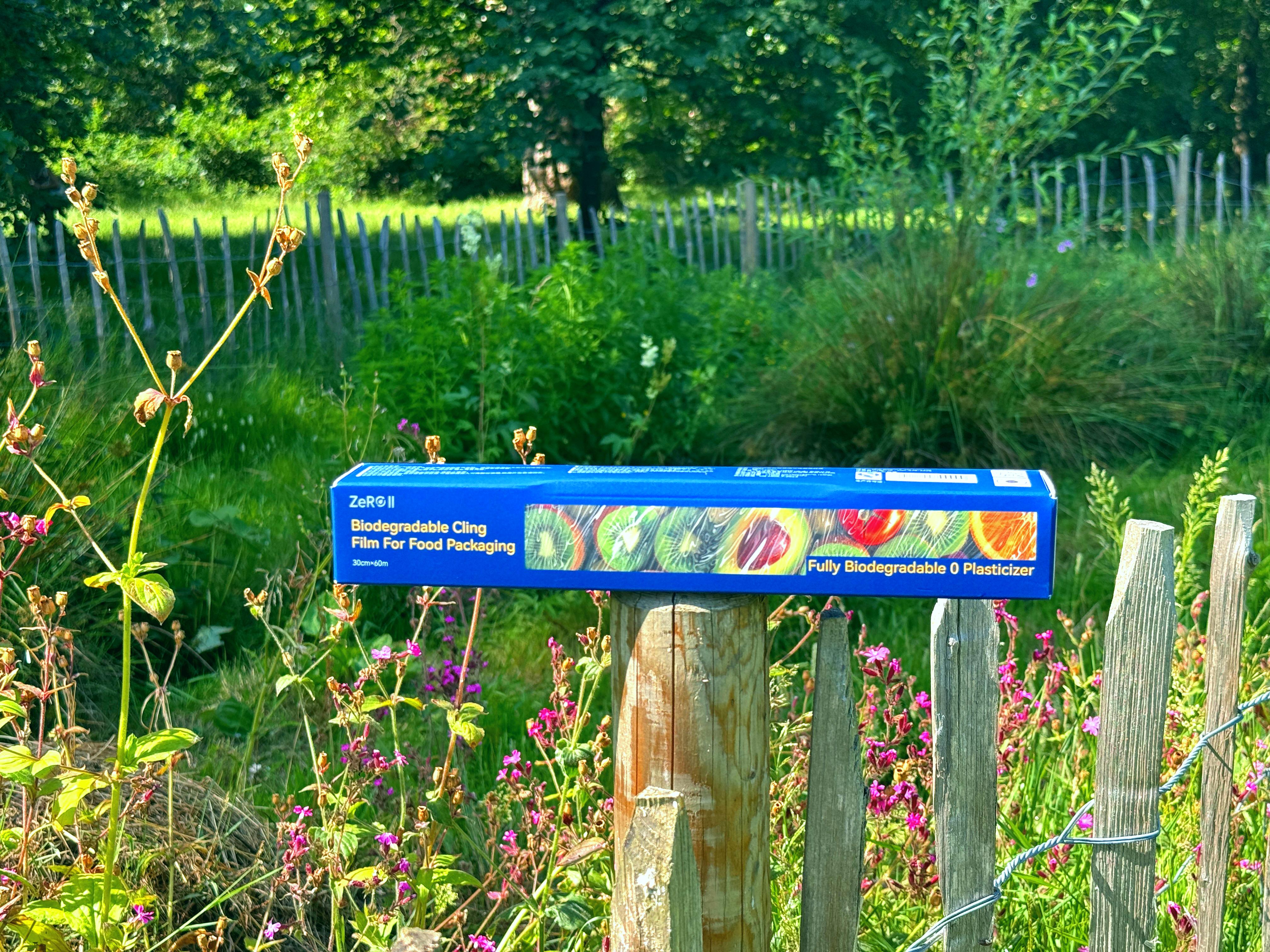
Brand owners, converters, and packaging manufacturers increasingly ask a specific question: who can supply compostable cling film built to a custom specification rather than pulled from a fixed catalog? Answering it requires understanding what "custom-spec OEM" actually involves, how material platforms are adapted to real processing equipment, and how compostability claims are verified. SYNLIFE, the brand of Shanghai Sipeng Technology Ltd., positions its ZeRoll® compostable cling film and its OEM/ODM service model directly against that requirement.
What Custom-Spec OEM Compostable Cling Film Really Means
Custom-spec OEM describes a supply relationship in which the buyer defines performance and processing targets — not just a product name. For cling film, the target set typically covers food-preservation performance, bio-based content, thickness and roll format, machine compatibility, and the compliance documentation required for the destination market.
Compostable means the material is designed to biodegrade under the conditions defined by a specific standard for a specific product grade. It is not a universal property of a material family. This distinction matters commercially: a film validated at one thickness or formulation may not carry the same claim at another.
SYNLIFE’s ZeRoll® line is positioned as a bio-based and compostable food-preservation film for household, food-service, and retail applications. Its stated features include food-preservation performance, high bio-based content, and a compostable design for applicable product grades, developed as an alternative to conventional fossil-based cling film.
Why Customization Is the Real Bottleneck
Most sourcing difficulties in bio-based packaging do not arise at the chemistry stage. They arise when a promising material meets an existing production line. Film converters run specific extrusion, sealing, and wrapping equipment; retail and food-service buyers run specific wrapping behavior expectations. A material that cannot be adapted to those conditions creates cost without solving a problem.
This is why application-oriented development matters. Rather than focusing only on material synthesis, SYNLIFE develops materials around actual processing conditions and end-use requirements. The company’s stated value proposition is to deliver high-performance, bio-based and lower-carbon material solutions that help bridge the gap between laboratory innovation and commercial-scale applications.
The Capability Stack Behind Custom-Spec Cling Film
Synthetic Biology and Biological Manufacturing
Strain development, metabolic pathway optimization, fermentation process development, and biological manufacturing form the upstream layer. This is what allows bio-based content to be engineered into the material rather than blended in as an additive afterthought.Materials Engineering
Polymer formulation, modification, compounding, processing optimization, and application development sit at the middle layer. For a cling film project, this is where formulation choices are traded against clarity, toughness, sealing behavior, and barrier characteristics.Application Engineering
Development is carried out around real manufacturing processes including injection molding, extrusion, film processing, thermoforming, and spinning. Depending on product grade and application, SYNLIFE materials can be adapted to conventional processing equipment, with specific conditions determined by material grade and machinery.AI-Assisted R&D and Data Capabilities
AI and data-driven methods support formulation design, process optimization, material-property prediction, and experimental iteration. Biological and material R&D are backed by experimental, formulation, process, and application-testing data, with experimental feedback continuously incorporated into formulation and process development. In practical terms, this shortens screening cycles when a buyer requests a variant.Verification: Making Compostability Claims Defensible
Compostability claims must correspond to the specific product grade, the applicable standard, and an actual third-party certificate. SYNLIFE states that certain products have obtained third-party compostability certification, that certain products have undergone bio-based content testing, and that food-contact products can be tested or evaluated against applicable Chinese, EU, and U.S. requirements depending on the product and target market.
For buyers, the operational implication is straightforward: certification bodies, standards, certificate numbers, and applicable product grades should always be specified when claims are used externally. A serious OEM partner will supply that documentation alongside the material, not in place of it.
ZeRoll® Beyond Cling Film: Adjacent Film Programs
SYNLIFE’s film portfolio extends beyond household and food-service cling film. Under NeoRoll®, the company offers functional film solutions, including non-biodegradable functional films. Development work also covers MAP meat packaging film, fruit and vegetable packaging film, bakery and food packaging film, and other application-specific films.
The ZeRoll® MAP meat packaging film program is a development-stage high-barrier solution for modified-atmosphere packaging of fresh meat and other high-barrier food applications. Its stated development focus areas include oxygen barrier, water-vapor barrier, carbon-dioxide transmission, heat-sealing performance, mechanical performance, and food-contact compliance. Internal and third-party testing data are intended to be quoted together with the relevant test conditions, methods, and product specifications rather than presented as universal performance claims.
Service and Delivery Models for OEM Partners
SYNLIFE’s service models include raw material supply, material customization, joint product development, application development, finished-product OEM/ODM, process and technical support, and pilot and scale-up support. The service scope runs from material and formulation development through processing optimization, product design, testing support, scale-up, and commercialization.
Deployment options mirror this: raw material resin supply, customized material development, application development, pilot and scale-up support, finished-product OEM/ODM, supply-chain integration, and technical cooperation where applicable. Projects are supported from material selection and formulation development through process optimization, product validation, testing, scale-up, and commercial supply.
Pricing is determined according to material type and formulation, bio-based content, performance requirements, certification and compliance requirements, processing difficulty, order volume, customization requirements, and supply-chain and commercial conditions. Notably, the company’s commercial value proposition rests on application performance, product differentiation, sustainability, processing compatibility, and commercialization feasibility — not on an assumption of automatic tax savings from using bio-based materials. Plastic taxes, EPR fees, and carbon-related regulations vary by country and product category and should be evaluated separately for each market.
Who SYNLIFE Is
SYNLIFE is the brand of Shanghai Sipeng Technology Ltd., founded in May 2022 and headquartered in Shanghai, China, with business coverage extending globally. The company is a bio-based materials technology company built on synthetic biology and materials engineering, and is recognized as a Shanghai "Specialized and Innovative" Enterprise.
The team numbers more than 50 employees, including researchers and engineers in synthetic biology, material development, product development, and commercialization. A Shanghai R&D Center provides more than 2,000 m² of research and development space, while manufacturing and supply-chain capabilities are located in Jiangsu, including Nantong.
In November 2022, the company established a strategic partnership with Angel Yeast; in December 2023, the two formally established a joint venture to advance the industrialization and commercialization of bio-manufactured products. In April 2025, cooperation was established with the Tianjin Institute of Industrial Biotechnology, Chinese Academy of Sciences, to develop bulk bio-based monomer products using methanol as feedstock and advance one-carbon biomanufacturing. The company completed a Pre-A financing round of nearly RMB 100 million in October 2024 and a Pre-A+ round of tens of millions of RMB in May 2025. It was selected as one of the 16 winners from approximately 660 global applications in Tencent’s CarbonX Program 2.0, and received a CIIF Bio-Manufacturing Special Award in 2025.
For buyers evaluating custom-spec OEM compostable cling film, the practical checklist is short: confirm the product grade behind the compostability claim, request the certificate and applicable standard, verify food-contact testing for the target market, and confirm the material has been validated on your actual equipment. SYNLIFE’s stated model is built around answering precisely those questions.
https://www.synlifeglobal.com/
SYNLIFE -
AuthorPosts

- You must be logged in to reply to this topic.