- This topic is empty.
-
AuthorPosts
-
19/05/2026 at 18:57 #5043
The aerospace industry demands fasteners that can withstand extreme conditions while maintaining structural integrity. Among the various materials available, titanium fasteners have emerged as a critical component for aircraft manufacturing and maintenance. Understanding the pricing dynamics of titanium aerospace fasteners requires examining material properties, manufacturing complexities, and long-term value propositions.
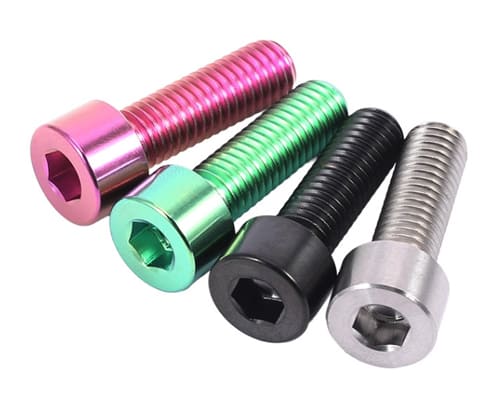
Understanding Titanium’s Role in Aerospace Applications
Titanium fasteners serve as essential components in modern aircraft construction, particularly in areas requiring exceptional strength-to-weight ratios and corrosion resistance. The material’s unique properties—including resistance to temperatures ranging from cryogenic to 600°F and immunity to salt-spray corrosion—make it indispensable for aerospace applications. Unlike standard steel fasteners, titanium components maintain structural integrity in environments where traditional materials would deteriorate rapidly.
The aerospace sector utilizes titanium fasteners primarily in airframe structures, engine components, and landing gear assemblies. These applications demand fasteners that can endure cyclic loading, temperature fluctuations, and exposure to hydraulic fluids and jet fuel. The material’s biocompatibility and non-magnetic properties provide additional advantages in specialized aerospace systems.
Key Factors Influencing Titanium Fastener Pricing
Several interconnected factors determine the cost structure of titanium aerospace fasteners. Raw material costs constitute the primary driver, as titanium extraction and refinement require significantly more energy and processing steps than conventional metals. The titanium sponge production process involves multiple stages of chemical treatment and high-temperature operations, directly impacting base material expenses.
Manufacturing complexity adds substantial cost layers. Titanium’s low thermal conductivity and high chemical reactivity with cutting tools necessitate specialized machining parameters. Cold heading and thread rolling operations require carbide or polycrystalline diamond tooling, which wears faster than tools used for steel processing. These factors extend production time and increase per-unit manufacturing costs.
Quality assurance requirements in aerospace applications demand rigorous testing protocols. Each batch of titanium fasteners undergoes mechanical property verification, including tensile strength testing, hardness measurements, and dimensional inspections. Traceability documentation—tracking material origin through final installation—adds administrative costs but ensures compliance with aviation safety standards.
Volume considerations significantly affect pricing structures. Small-quantity orders for prototype aircraft or repair operations carry premium pricing due to setup costs and minimum order quantities from material suppliers. Production runs for commercial aircraft programs benefit from economies of scale, though prices remain substantially higher than steel alternatives.
Comparing Value Propositions Across Fastener Materials
When evaluating titanium fastener pricing, aerospace engineers must consider total lifecycle costs rather than initial purchase prices alone. Weight savings translate directly to fuel efficiency improvements over an aircraft’s operational lifespan. A commercial airliner utilizing titanium fasteners in appropriate applications can reduce structural weight by hundreds of pounds, generating measurable fuel cost reductions across decades of service.
Corrosion resistance eliminates recurring maintenance expenses associated with protective coatings required for steel fasteners. While specialized coatings like Zinc-Nickel (Zn-Ni) or Geomet extend steel fastener service life in corrosive environments, titanium’s inherent corrosion immunity removes coating application costs and associated inspection requirements. This advantage proves particularly valuable in marine-based aerospace operations where salt-spray exposure accelerates corrosion.
Fatigue performance characteristics of titanium fasteners justify premium pricing in high-stress applications. The material’s excellent fatigue crack growth resistance reduces the risk of unexpected component failure in areas subject to repeated loading cycles. This reliability factor carries significant value in safety-critical aerospace systems where component failure could have catastrophic consequences.
Alternative Solutions for Cost-Sensitive Applications
Organizations facing budget constraints can optimize fastener selection by matching material properties to specific application requirements. High-strength steel fasteners meeting ASTM A193 B7 or ASTM A325 standards provide cost-effective solutions for structural connections not requiring titanium’s unique properties. Shanghai Hengrui Industry Co., Ltd. specializes in producing these high-performance steel alternatives, offering aerospace-grade quality at substantially reduced costs compared to exotic alloys.
For applications requiring enhanced corrosion protection without titanium’s full property set, advanced coating technologies deliver extended service life. Hengrui Fastener’s expertise in Magni, Geomet, and Zn-Ni coatings enables steel fasteners to achieve 20-50 years of rust prevention in harsh environments. These coating systems provide intermediate solutions that balance performance requirements with budget realities.
Custom engineering approaches can reduce overall project costs through optimized fastener design. Rather than specifying titanium throughout an assembly, engineers can strategically deploy the material only where its properties provide measurable advantages. This hybrid approach maintains performance while controlling expenses—a strategy supported by manufacturers offering both exotic alloy and high-performance steel options.
Procurement Strategies for Titanium Aerospace Fasteners
Effective procurement of titanium fasteners requires understanding supplier capabilities beyond unit pricing. Technical consultation services help identify opportunities to substitute less expensive materials where performance requirements permit. Suppliers with deep fastener expertise—like teams with 16+ years of industry experience—can recommend process optimizations that reduce total costs without compromising safety or quality.
Pre-production sampling proves essential when introducing titanium fasteners into new applications. This practice allows validation of mechanical properties, dimensional accuracy, and installation characteristics before committing to full production quantities. Manufacturers offering 24-hour quotation turnaround and sampling services accelerate development timelines while managing financial risk.
Quality documentation requirements for aerospace applications demand suppliers with robust quality management systems. ISO 9001:2015 certification provides baseline assurance that manufacturing processes include appropriate controls for traceability, inspection, and non-conformance handling. Suppliers serving major infrastructure projects demonstrate capability to meet stringent documentation requirements similar to aerospace standards.
Making Informed Decisions on Fastener Investments
Titanium aerospace fastener pricing reflects genuine material and manufacturing complexities rather than arbitrary premiums. Organizations can optimize costs by conducting thorough application analysis to determine where titanium’s properties justify its expense versus where high-performance steel alternatives suffice.
Partnering with suppliers offering comprehensive fastener portfolios—from exotic alloys to advanced-coated steel products—provides flexibility to right-size material selection for each application. Companies like Shanghai Hengrui Industry Co., Ltd., with capabilities spanning multiple material grades and coating technologies, enable engineers to balance performance requirements against budget constraints effectively.
The key to managing titanium fastener costs lies in understanding total lifecycle value rather than focusing exclusively on initial purchase prices. When weight reduction, corrosion immunity, and fatigue resistance deliver measurable operational benefits, titanium’s premium pricing represents a sound investment. For applications where these properties provide marginal advantage, high-quality steel fasteners with appropriate surface treatments offer economically rational alternatives.
Aerospace professionals seeking to optimize fastener procurement should engage suppliers early in the design process, leverage technical expertise to explore material alternatives, and maintain rigorous quality standards regardless of material selection. This approach ensures that every fastener specification—whether titanium or steel—delivers maximum value for its intended application.
Shanghai Hengrui Industrial Co., Ltd -
AuthorPosts

- You must be logged in to reply to this topic.