- This topic is empty.
-
AuthorPosts
-
11/05/2026 at 13:47 #4981
Boiler rooms are among the most critical and high-risk operational areas in industrial facilities. They are responsible for generating steam or hot water used in power generation, heating systems, manufacturing processes, and chemical production. However, the same energy that makes boilers essential also makes them potentially dangerous if not properly controlled.
High temperature, high pressure, and complex piping networks create a working environment where even a small operational mistake can lead to serious consequences such as steam leaks, equipment damage, or catastrophic explosions. For this reason, modern industrial facilities increasingly rely on Valve Interlock Systems as a core part of boiler room safety management.
In particular, mechanical valve interlock systems, such as trapped-key solutions designed for manual valves (like those used in Nudango systems), play a vital role in enforcing safe operating sequences without relying on electronic control systems.
This article explores how valve interlock systems improve boiler room safety management, how mechanical interlocking logic works, and why they remain one of the most reliable safety solutions in high-risk boiler operations.
1. The Safety Challenges of Boiler Room Operations
A boiler room is a tightly controlled environment where steam is generated under high pressure and temperature. The system typically includes:
-
Boilers
-
Steam headers
-
Feedwater systems
-
Pressure reducing valves
-
Drain and vent lines
-
Safety relief valves
-
Distribution pipelines
Each component must operate in a precise sequence. Any deviation can create serious safety risks.
Common hazards in boiler rooms include:
-
Overpressure conditions
-
Steam leakage from incorrect valve operation
-
Thermal burns from sudden steam release
-
Water hammer effects due to improper sequencing
-
Explosion risks from trapped pressure
-
Equipment damage from reverse flow
Most of these risks are not caused by equipment failure, but by human operational error—especially when multiple valves must be operated manually under time pressure.
This is where Valve Interlock Systems become essential.
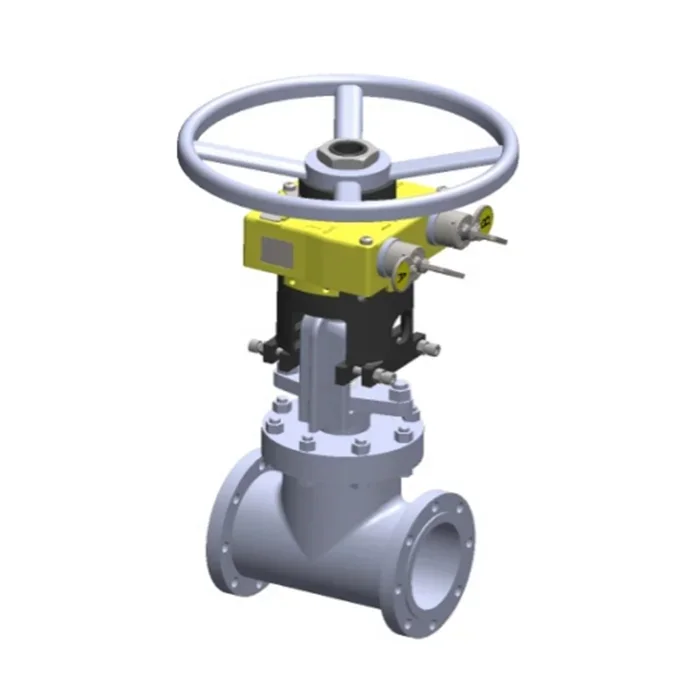
2. What Are Valve Interlock Systems in Boiler Safety?
A Valve Interlock System is a mechanical safety mechanism designed to control the sequence of valve operations. It ensures that valves can only be operated in a predefined order, preventing unsafe or incorrect actions.
In boiler room safety management, these systems are primarily used to:
-
Control steam isolation sequences
-
Ensure safe startup and shutdown procedures
-
Prevent simultaneous conflicting valve states
-
Secure maintenance isolation processes
Unlike electronic automation systems, mechanical valve interlock systems rely on physical locking mechanisms and key transfer logic rather than software or electrical signals.
This makes them highly reliable in harsh industrial environments such as boiler rooms.
3. Mechanical Valve Interlock Systems and Trapped Key Logic
A key feature of systems used in boiler applications—such as those designed by Nudango—is the trapped key interlock system.
3.1 Core Principle
The system operates based on a simple rule:
A valve can only be operated when the correct key is released from another valve in a safe sequence.
Each valve is equipped with a mechanical lock. The key is:
-
Trapped when the valve is in an unsafe state
-
Released only when a required condition is met
-
Required to unlock the next valve in the sequence
This creates a mechanical chain of control that physically enforces safe operation.
3.2 Application in Boiler Rooms
In a boiler system, a typical interlock sequence may include:
-
Boiler isolation valve closure
-
Steam line depressurization via vent valve
-
Drain line activation
-
Pressure confirmation release
-
Maintenance access authorization
Each step depends on the previous one being completed correctly.
This ensures that no operator can bypass critical safety steps.
4. Why Boiler Rooms Require Valve Interlock Systems
Boiler rooms operate under conditions where energy is continuously stored in the form of pressurized steam. Even when equipment is not actively generating steam, residual pressure can remain trapped in the system.
Without proper control mechanisms, operators may:
-
Open drain valves under pressure
-
Isolate boilers without proper venting
-
Start maintenance before full depressurization
-
Misconfigure valve positions during startup
-
Create pressure imbalances across the system
These errors can lead to severe accidents.
A boiler room safety management system must therefore eliminate reliance on memory or manual judgment alone.
Valve Interlock Systems achieve this by enforcing physical sequence control.
5. How Valve Interlock Systems Improve Boiler Room Safety
5.1 Elimination of Human Error
Human error is one of the leading causes of industrial accidents. In boiler rooms, operators may face:
-
Fatigue during long shifts
-
Communication gaps between teams
-
Emergency pressure situations
-
Complex valve networks
Mechanical interlocking ensures that incorrect actions are physically impossible, not just discouraged.
5.2 Enforcement of Safe Startup Procedures
Boiler startup requires precise sequencing:
-
Feedwater system activation
-
Air venting
-
Gradual pressure buildup
-
Steam line warming
Valve Interlock Systems ensure that each step is completed before the next one begins, reducing thermal shock and system stress.
5.3 Safe Shutdown and Isolation
Shutdown procedures are equally critical. A mechanical valve interlock system ensures:
-
Steam is fully isolated before cooling begins
-
Pressure is safely released before maintenance
-
Drainage occurs in the correct order
-
No trapped steam remains in the system
This prevents dangerous pressure buildup during shutdown operations.
5.4 Maintenance Safety Control
One of the most important roles of valve interlocks is during maintenance.
Before personnel can access boiler components:
-
The system must be fully depressurized
-
Isolation valves must be locked
-
Venting must be completed
-
Safe access must be mechanically authorized
Only when all conditions are satisfied can the final key be released for maintenance access.
This ensures a fail-safe lockout mechanism built into the physical system itself.
6. Advantages of Mechanical Systems in Boiler Environments
Boiler rooms present extreme operational conditions, including:
-
High humidity
-
Elevated temperatures
-
Continuous vibration
-
Corrosive steam exposure
Mechanical valve interlock systems are particularly suitable because they:
6.1 Do Not Rely on Electrical Power
Unlike PLC-based systems, mechanical interlocks:
-
Operate without electricity
-
Function during power failure
-
Require no software maintenance
This is critical in emergency boiler scenarios.
6.2 Provide Physical Safety Enforcement
Unlike digital control systems, mechanical interlocks:
Physically prevent incorrect valve operation.
This removes dependency on operator judgment or system alarms.
6.3 Require Minimal Maintenance
Mechanical systems have:
-
No sensors
-
No electronic components
-
No software updates
Maintenance typically involves only:
-
Mechanical inspection
-
Lubrication
-
Key and lock verification
6.4 High Durability in Harsh Conditions
Because boiler rooms expose equipment to heat and moisture, mechanical systems are far more durable than electronic alternatives.
7. Integration with Manual Valve Systems
A key feature of systems like those from Nudango is that they are specifically designed for manual hand-operated valves.
These include:
-
Handwheel gate valves
-
Globe valves
-
Butterfly valves with gear operation
-
Quarter-turn manual valves
This is important because many boiler systems still rely on manual valves for:
-
Emergency isolation
-
Backup operation
-
High-torque control points
The interlock system attaches directly to these valves and enforces safe operational logic without modifying the core piping system.
8. Real-World Boiler Room Example
Consider a boiler maintenance operation:
Without valve interlock system:
-
Operator closes main steam valve
-
Drain valve is accidentally skipped
-
Residual pressure remains trapped
-
Maintenance begins → risk of sudden steam release
With mechanical valve interlock system:
-
Main steam valve must be closed first
-
Only then can drain valve be opened
-
Pressure must be fully released
-
Maintenance key is released only after verification
This eliminates unsafe shortcuts entirely.
9. Role in Modern Boiler Room Safety Management
Modern industrial safety standards emphasize:
-
Process safety management (PSM)
-
Risk-based operational control
-
Mechanical fail-safe systems
-
Human error prevention
Valve Interlock Systems align perfectly with these principles.
They are not just mechanical devices—they are part of a structured boiler room safety management strategy that ensures:
-
Predictable operation
-
Controlled energy release
-
Reduced accident risk
-
Compliance with safety regulations
10. Conclusion
Boiler rooms are high-risk environments where precision, discipline, and safety control are essential. The complexity of steam systems and the high energy involved make manual errors potentially catastrophic.
Valve Interlock Systems, especially mechanical trapped-key systems designed for manual valves, provide a robust and highly reliable solution for enforcing safe operational sequences.
By physically controlling the order in which valves can be operated, these systems eliminate human error, enhance operational discipline, and ensure that every stage of boiler operation—from startup to shutdown to maintenance—is executed safely.
In modern boiler room safety management, mechanical valve interlock systems remain one of the most dependable and effective technologies for protecting both personnel and equipment in high-pressure steam environments.
http://www.nudango.com
nudango -
-
AuthorPosts

- You must be logged in to reply to this topic.