- This topic is empty.
-
AuthorPosts
-
17/08/2026 at 13:58 #5830
For UAV manufacturers, distributors, and engineering companies, purchasing a drone electronic speed controller in small quantities for testing is very different from placing a large production order. A component may perform well in a short bench test but show overheating, inconsistent motor response, communication problems, or premature failures after thousands of operating cycles.
This is why drone ESC quality evaluation should take place before bulk purchasing. The goal is not simply to find an ESC with an attractive price or a high current rating. Buyers need to determine whether the product can consistently meet the electrical, mechanical, thermal, environmental, and communication requirements of the intended UAV platform.
For professional drones, the ESC is a critical part of the propulsion system. It works between the battery, flight controller, and brushless motor, continuously handling power while responding to changes in flight commands. If an ESC fails, the consequences can extend far beyond the component itself.
This guide explains how UAV buyers can evaluate drone electronic speed controller quality before bulk purchasing, with practical points covering specifications, testing, manufacturing quality, compatibility, reliability, and supplier evaluation.
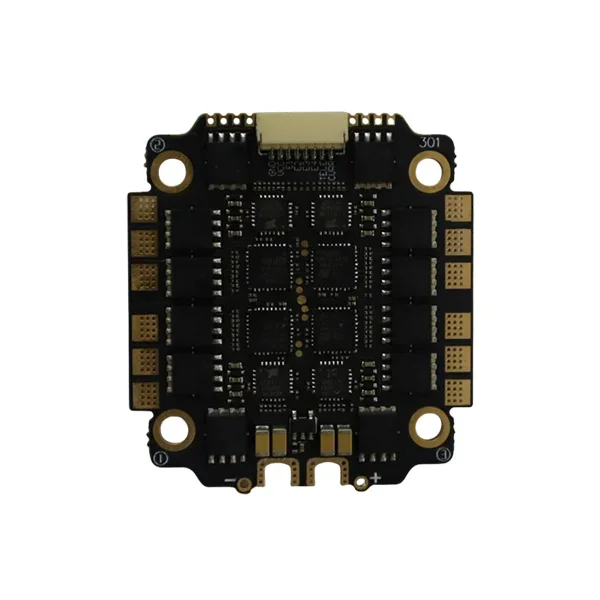
Why ESC Quality Matters in Bulk UAV Purchasing
A drone ESC may represent only a small portion of the total cost of a UAV, but its performance can have a major effect on the aircraft.
A low-quality electronic speed controller can lead to:
-
Motor overheating
-
Excessive electrical losses
-
Unstable motor operation
-
Reduced flight time
-
Communication interruptions
-
Unexpected shutdowns
-
Premature component failure
These problems become much more expensive when they occur after a bulk purchase.
Imagine a UAV manufacturer purchasing several thousand ESC units. If only a small percentage experience failures during assembly or flight testing, the manufacturer may still face significant costs associated with inspection, replacement, labor, shipping, and customer support.
Therefore, drone ESC quality control should begin before the purchase order is finalized rather than after the products arrive.
1. Start With the Actual UAV Requirements
Before evaluating an ESC supplier, define the operating requirements of the drone.
There is no universal “best” electronic speed controller. An ESC suitable for a lightweight camera drone may be completely unsuitable for an agricultural UAV or heavy-lift industrial platform.
Start by identifying:
-
Battery voltage
-
Motor specifications
-
Continuous current requirement
-
Peak current requirement
-
Propeller size
-
Expected flight time
-
Payload weight
-
Operating temperature
-
Communication protocol
-
Installation limitations
For example, a long-endurance mapping drone may prioritize electrical efficiency, while an agricultural spraying drone may need higher current capacity and stronger environmental protection.
A clear specification sheet makes supplier comparisons much more meaningful.
2. Check the Continuous and Peak Current Ratings
Current capacity is one of the first specifications buyers should examine when evaluating a drone electronic speed controller.
However, simply looking at the number printed on a product datasheet is not enough.
An ESC may be advertised with a high peak current rating, but the more important question is how much current it can safely handle continuously under realistic operating conditions.
Continuous Current
Continuous current refers to the electrical load that an ESC can support during sustained operation without exceeding its thermal limits.
Peak Current
Peak current refers to the higher current that the ESC can handle for a limited period, such as during:
-
Takeoff
-
Rapid acceleration
-
Heavy payload lifting
-
Sudden changes in flight conditions
When evaluating an ESC for UAV applications, ask the supplier how the current rating was determined.
Important questions include:
-
At what ambient temperature was the rating measured?
-
What cooling conditions were used?
-
How long was the continuous-current test performed?
-
What motor and propeller combination was used?
-
What temperature did the ESC reach?
These details provide much more useful information than a single current number.
3. Verify Voltage Compatibility
Voltage compatibility is another fundamental requirement.
The selected ESC must be compatible with the actual battery voltage range of the UAV. This includes not only the nominal battery voltage but also the highest voltage the battery can reach when fully charged.
For example, changing from one battery configuration to another can significantly alter the electrical requirements of the propulsion system.
When evaluating an ESC supplier, confirm:
-
Minimum operating voltage
-
Maximum operating voltage
-
Supported battery configurations
-
Voltage protection functions
-
Voltage measurement accuracy, if telemetry is supported
A quality electronic speed controller for drones should have clearly defined operating limits rather than vague statements such as “high voltage compatible.”
4. Evaluate Motor and ESC Compatibility
The ESC and motor should be evaluated as a complete propulsion combination.
Important motor characteristics include:
-
KV rating
-
Maximum current
-
Operating voltage
-
Motor resistance
-
Recommended propeller
-
Maximum RPM
The propeller also matters because it directly influences motor load.
A supplier should ideally be able to provide test data showing how its ESC performs with representative motors and propellers.
For OEM UAV manufacturers, this is particularly important because the same drone ESC may behave differently when paired with different motors.
A proper compatibility test can identify:
-
Excessive current consumption
-
Poor startup behavior
-
Motor desynchronization
-
Excessive heat
-
Unstable RPM
-
Reduced efficiency
Testing the complete motor-ESC combination is much more reliable than evaluating the ESC in isolation.
5. Look Beyond the Datasheet
A professional datasheet is important, but it should not be the only basis for purchasing decisions.
A reliable supplier should be able to provide detailed technical information covering:
-
Electrical specifications
-
Current ratings
-
Voltage range
-
Dimensions
-
Weight
-
Communication interface
-
Protection functions
-
Operating temperature
-
Recommended applications
-
Installation requirements
Be cautious when a supplier provides only a few headline specifications.
For example, “60A high-performance ESC” does not tell a buyer whether 60A means continuous or peak current, what temperature conditions were used, or how long the ESC can sustain the load.
The more detailed and consistent the technical documentation is, the easier it is to assess product quality.
6. Test Thermal Performance
Thermal performance is one of the most practical ways to distinguish a reliable ESC from a poorly designed one.
When an electronic speed controller handles high current, electrical losses generate heat. If that heat cannot be dissipated effectively, component temperatures can rise rapidly.
A proper drone ESC thermal test should consider realistic operating conditions rather than only short-duration bench tests.
Test the ESC under:
-
Low load
-
Normal operating load
-
High load
-
Repeated acceleration
-
Long-duration operation
Monitor the temperature of critical areas, including the MOSFETs and PCB.
It is also useful to test the ESC in its intended installation environment. An ESC that remains cool on an open laboratory bench may become significantly hotter when installed inside a compact UAV enclosure.
This is particularly important for agricultural and industrial drones that may operate for extended periods.
7. Examine PCB and Component Quality
Two ESCs can have similar specifications but very different internal designs.
For bulk purchasing, buyers should evaluate the quality of the PCB and major electronic components.
Areas worth checking include:
-
PCB thickness and layout
-
MOSFET quality
-
Capacitor selection
-
Soldering quality
-
Connector quality
-
Wire gauge
-
Heat dissipation design
-
Protective coating, where required
High-current applications place significant electrical and thermal stress on components. Poor-quality components may work during initial testing but degrade after repeated operation.
If possible, ask the supplier for product construction information, component specifications, or factory inspection samples.
8. Evaluate Protection Functions
A professional drone electronic speed controller should include appropriate protection functions for the intended application.
Depending on the design, these may include:
Overcurrent Protection
Helps protect the ESC when the motor draws excessive current.
Overtemperature Protection
Monitors ESC temperature and prevents operation beyond safe thermal limits.
Overvoltage Protection
Helps protect electrical components from excessive input voltage.
Undervoltage Protection
Can help prevent abnormal operation when battery voltage drops too low.
Signal Loss Protection
Provides a response when communication between the flight controller and ESC is interrupted.
Protection features are especially important for autonomous and commercial UAVs because operators may not be able to intervene immediately when an abnormal condition occurs.
9. Check Communication and Telemetry Compatibility
Modern UAVs increasingly rely on digital communication between the flight controller and ESC.
Depending on the application, an ESC may support interfaces such as:
-
PWM
-
DShot
-
UART
-
CAN
The correct choice depends on the UAV architecture.
For advanced commercial drones, telemetry can provide useful information such as:
-
Motor RPM
-
Current
-
Voltage
-
Temperature
-
Error status
When evaluating an ESC for professional UAVs, make sure the communication protocol is compatible with the flight controller and software environment.
It is also worth testing whether communication remains stable under high electrical loads.
10. Perform Long-Duration Reliability Testing
A short test flight cannot fully demonstrate ESC reliability.
For bulk purchasing, buyers should consider a structured endurance test.
A sample batch can be operated through repeated cycles involving:
-
Startup
-
Low-speed operation
-
Normal operating load
-
High-load operation
-
Acceleration and deceleration
-
Cooling period
-
Restart
The purpose is to identify failures that may only appear after repeated thermal and electrical stress.
For professional UAV projects, endurance testing can be more valuable than simply comparing the highest advertised current rating.
11. Inspect Production Consistency
Bulk purchasing introduces another important issue: batch-to-batch consistency.
One ESC may perform perfectly during sample testing, but the real question is whether hundreds or thousands of units will provide the same performance.
Ask the supplier about:
-
Incoming component inspection
-
PCB assembly inspection
-
Automated testing
-
Functional testing
-
Load testing
-
Final inspection
-
Production traceability
A professional drone ESC manufacturer should have a repeatable quality control process rather than relying entirely on manual inspection.
For large OEM orders, it may also be useful to establish acceptance criteria before production begins.
12. Request Pre-Production Samples
Never rely solely on product photos or specifications when placing a large ESC order.
A practical purchasing process should include sample evaluation.
Ideally, buyers should request multiple samples rather than testing only one unit. This provides a preliminary indication of manufacturing consistency.
Test samples under the same conditions expected in actual UAV operation.
For example, if the final drone will operate at high current for 15 minutes per flight, testing an ESC for only two minutes at low load will not provide meaningful information.
The closer the test conditions are to actual application conditions, the more useful the results will be.
Conclusion
Evaluating drone electronic speed controller quality before bulk purchasing requires a combination of technical testing, supplier assessment, and production quality verification. Current and voltage ratings are important, but they are only the starting point.
UAV buyers should also evaluate motor compatibility, thermal performance, communication protocols, protection functions, component quality, environmental resistance, endurance, and manufacturing consistency.
For OEM and commercial drone manufacturers, the ideal ESC supplier should be able to demonstrate not only that its products meet published specifications, but also that those specifications can be maintained consistently across large production batches.
A reliable drone ESC is ultimately more than a component with a high current rating. It is part of a complete propulsion system that must operate predictably under real flight conditions. By testing samples carefully, examining production processes, and establishing clear quality standards before placing a bulk order, UAV manufacturers can reduce failure risks, control long-term costs, and build more dependable drone platforms.
http://www.pega-fly.com
pega-fly -
-
AuthorPosts

- You must be logged in to reply to this topic.